
Nestled on the coast of the Sea of Japan, Kanazawa seems to escape the typical tourist itineraries. And yet, its understated beauty and rich cultural heritage make it a worthwhile destination not only for photographers but for anyone looking beyond the cliché. In this photography guide to Kanazawa, we’ll dive into why the city deserves a spot in the travel plans of those eager to capture the true essence of Japan.
Why Kanazawa Needs to Be on Your Japan Itinerary
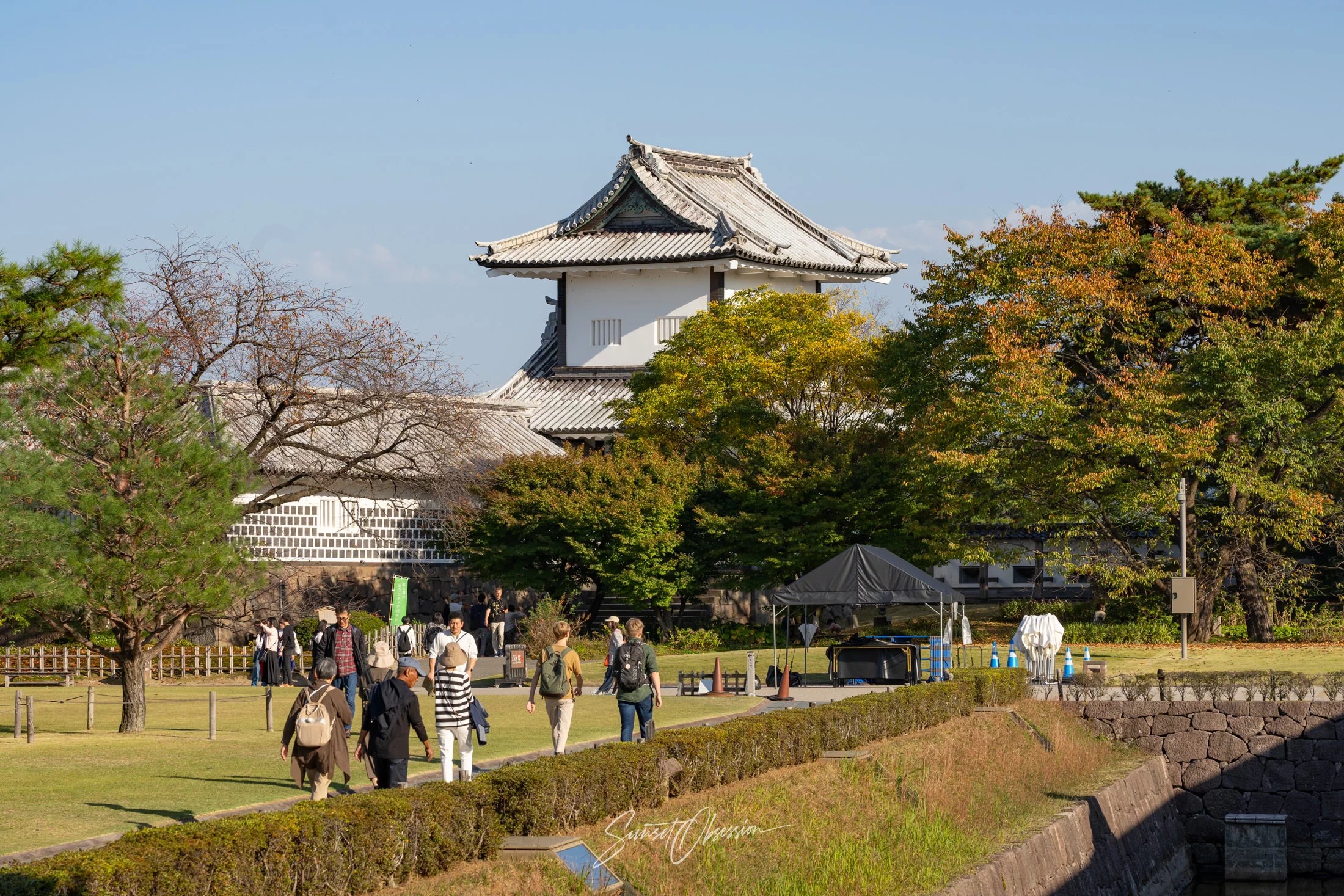
If you’re anything like me not so long ago, the name Kanazawa probably doesn’t tell you all that much. Indeed, Kanazawa certainly lacks the fame and recognition of Tokyo or Kyoto. And yet, its significance in Japanese culture cannot be overstated.
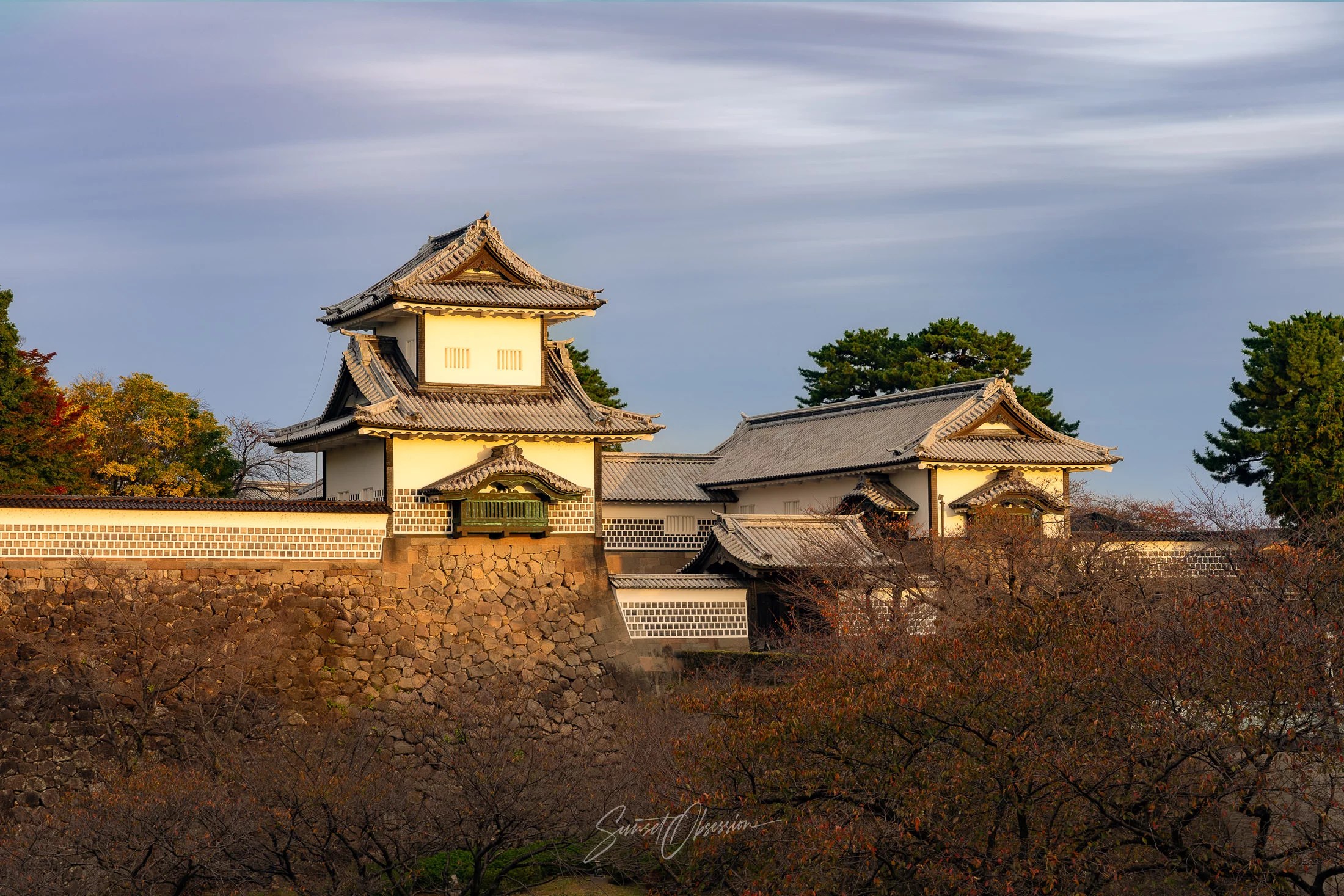
During the Edo period, Kanazawa was a seat of the powerful Maeda clan and one of Japan’s most significant and influential castle towns. And while modern Kanazawa is very different, traces and reminders of that era are still clearly visible throughout the city.
And that’s exactly what makes it so fun to explore. Be that its well-preserved historic districts, beautiful gardens, or traditional crafts and art forms that still flourish today, Kanazawa seamlessly blends the past and the present into something unique and unmistakably Japanese.
As a photographer, you’ll find plenty of delightful compositions here worth capturing. And for a casual tourist, there’ll be no shortage of fascinating historical landmarks to discover or traditional activities to engage in.
And the best part is that Kanazawa remains relatively unknown to most visitors. This means you’ll be able to enjoy it without the overwhelming crowds that plague so many other places in Japan.
On top of that, Kanazawa is well connected to the rest of Japan and is easily reachable from Tokyo or Kyoto by Shinkansen. Its location is perfect to serve as a home base for a variety of exciting day trips. Add this all up, and it becomes clear why you should consider Kanazawa for your itinerary.
Kanazawa is a dream destination not only for photographers but anyone seeking to immerse themselves in Japan’s cultural heritage and natural beauty. Whether you’re drawn to history, landscapes, or unique experiences, Kanazawa will have something to offer.
Best Photo Locations in Kanazawa
It so happens that the best photo locations in Kanazawa are also its most prominent and popular landmarks. So whether you’re a passionate photographer or a casual traveler, these will provide an excellent starting point.
Kanazawa Castle
I can’t recall how I first came across Kanazawa during my research. But what I do remember quite clearly is that the first thing to catch my eye was its castle. The moment I saw images of it online, I knew I wanted to photograph it myself.
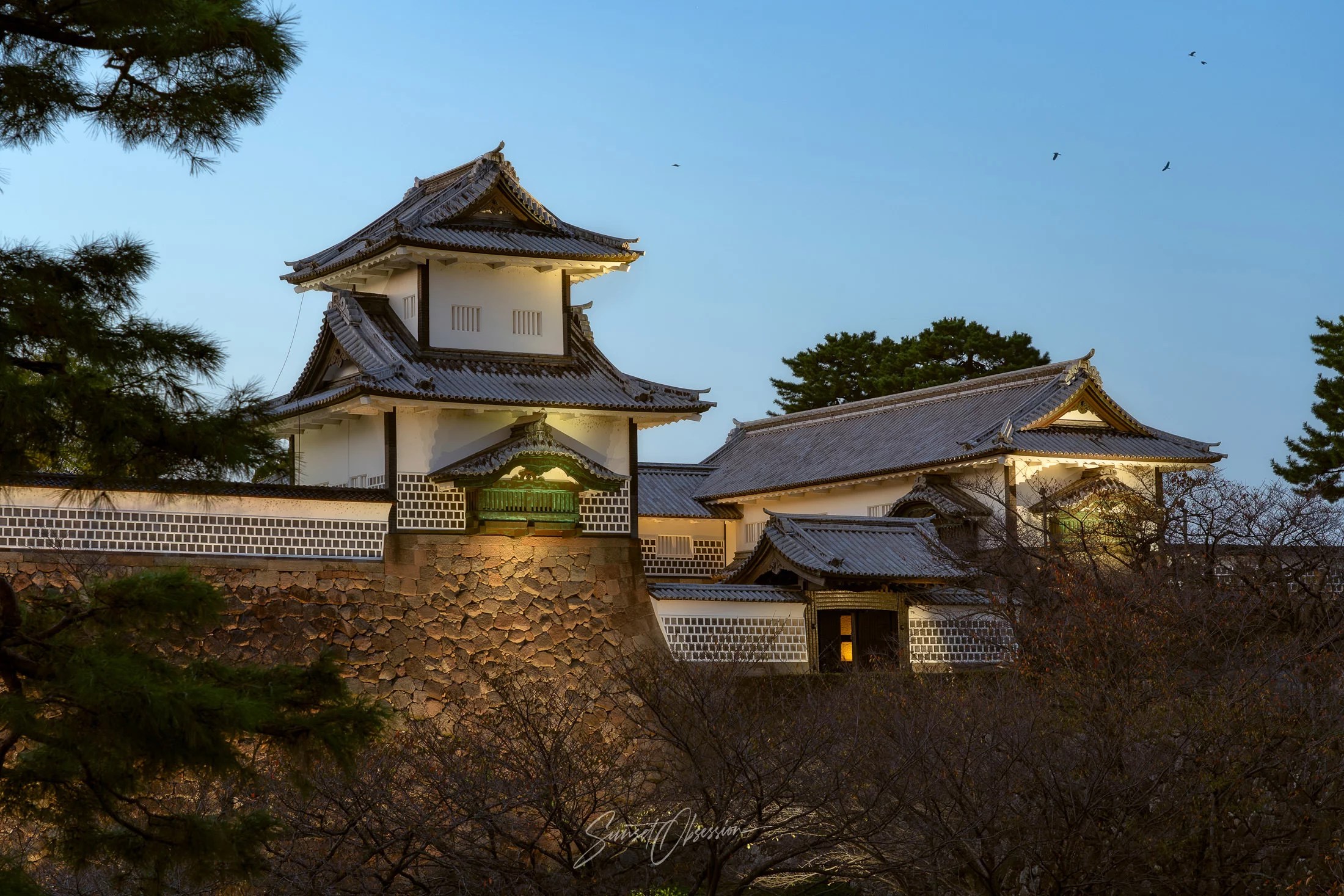
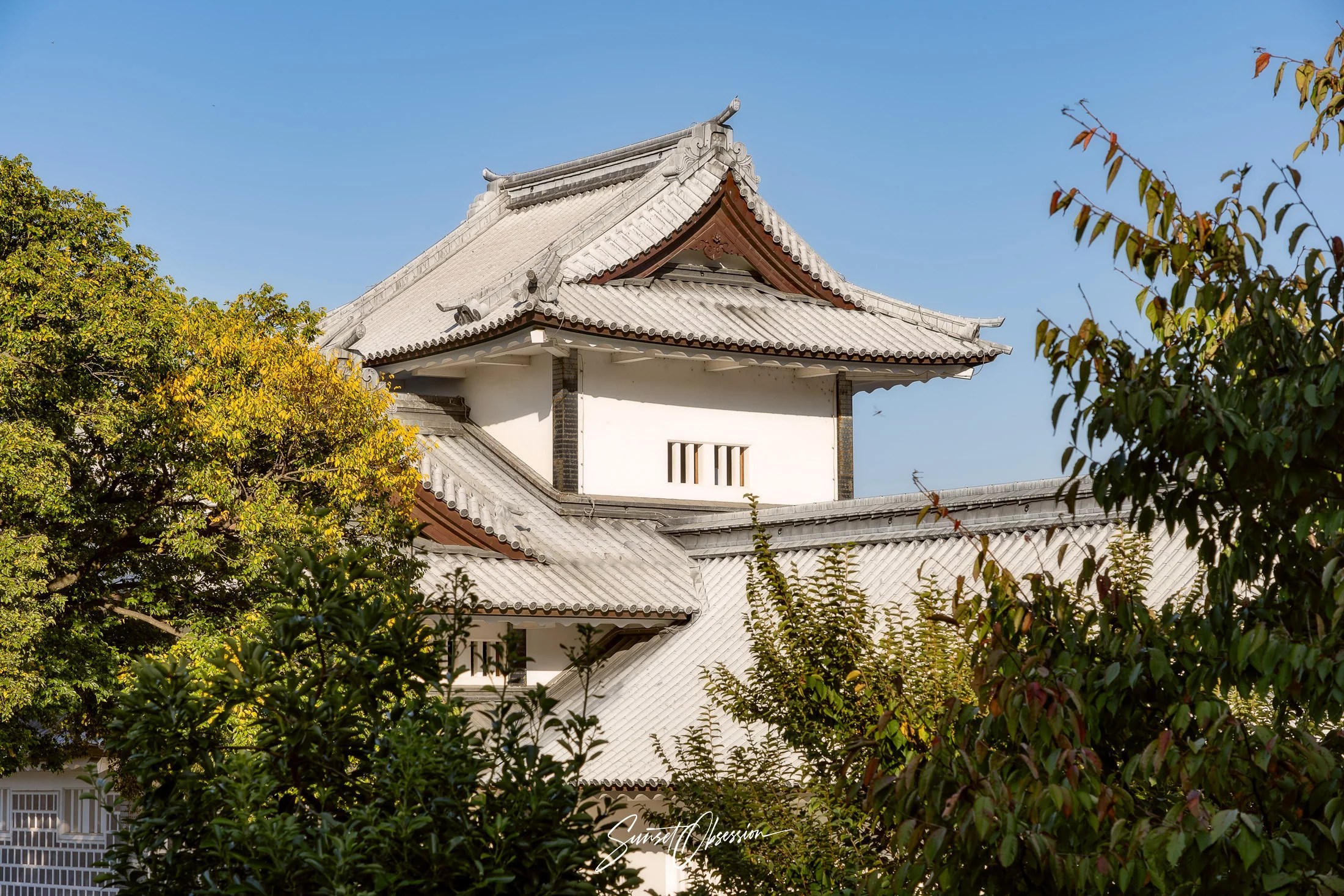
That said, once you finally see it, Kanazawa Castle may feel… like a bit of a letdown at first. Located in the heart of the city amidst the wide park complex, it is more of a ruin than an actual castle. Only a few walls, two turrets, a gate, and a storehouse remain.
But while it is certainly a far cry from what you have in Osaka or Matsumoto, Kanazawa Castle has its charm. And given that a large-scale restoration project is currently underway, it will only grow prettier as time passes by.
Castle grounds are a perfect place for a leisurely afternoon stroll. Those into history and all things medieval may peek inside the storehouse (for a small fee) to learn more about its glorious past. Meanwhile, photographers will easily find a ton of promising angles.
As a photography location, Kanazawa Castle works both during sunrise and sunset. In the morning, the rising sun paints its walls golden creating a striking contrast with a darker sky. In the evening, weather cooperating, you might catch some incredible colors right above it.
Just make sure to come early enough and scout the area for possible compositions. It is rather vast and it isn’t always immediately obvious where the best spot might be. So give yourself enough time to prepare.
Kenroku-en Garden
Kenroku-en (兼六園) is arguably Kanazawa’s top attraction and deservedly so. What used to be the outer grounds of the Kanazawa Castle back in the Edo era, is known today as one of Japan’s Three Great Gardens, alongside Koraku-en in Okayama, and Kairaku-en in Mito.
The name Kenroku-en stands for “a garden with six characteristics”. This is a reference to the Chinese landscape theory, which lists six key elements of a perfect garden. These are spaciousness, seclusion, artificiality, antiquity, abundant water, and broad views.
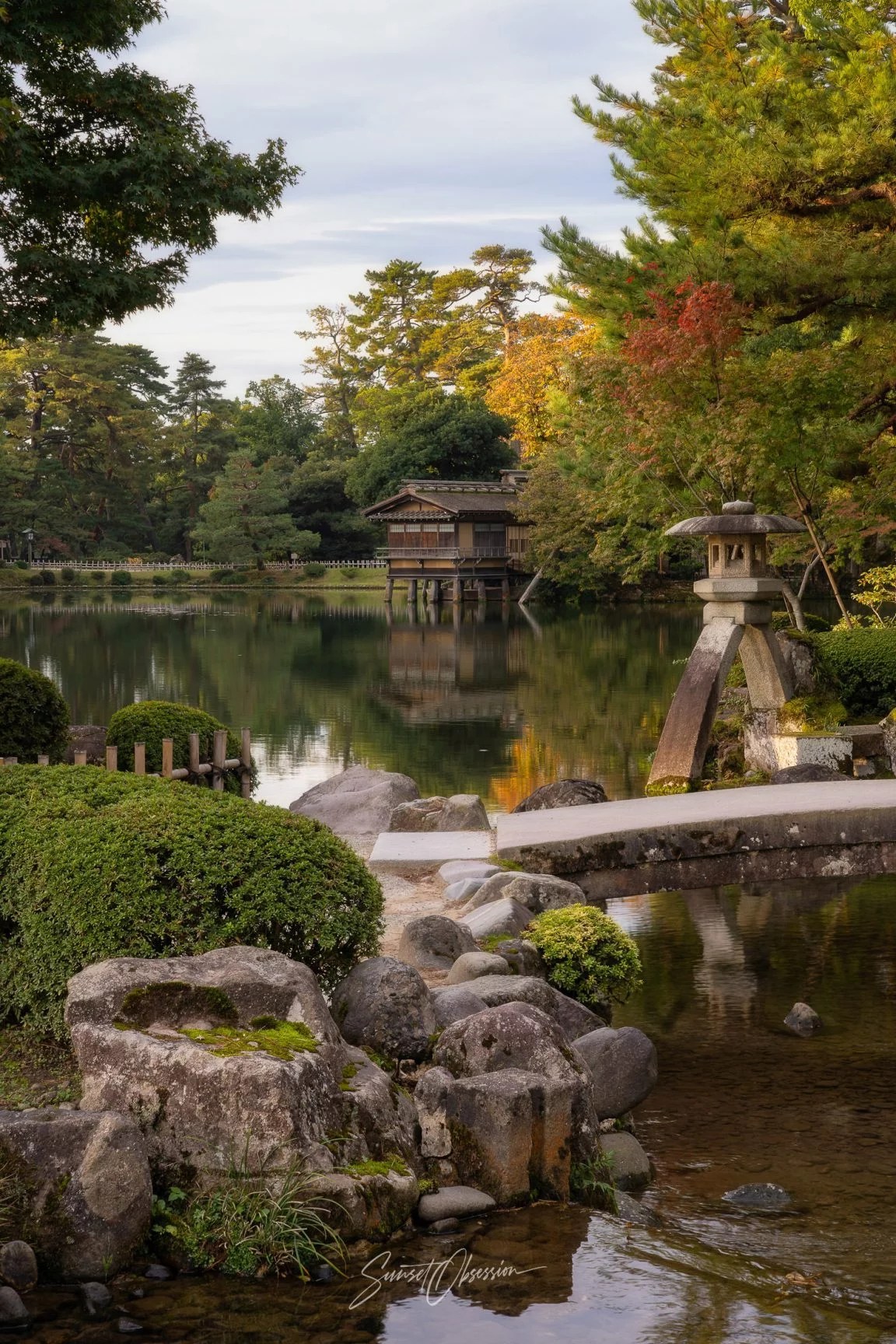
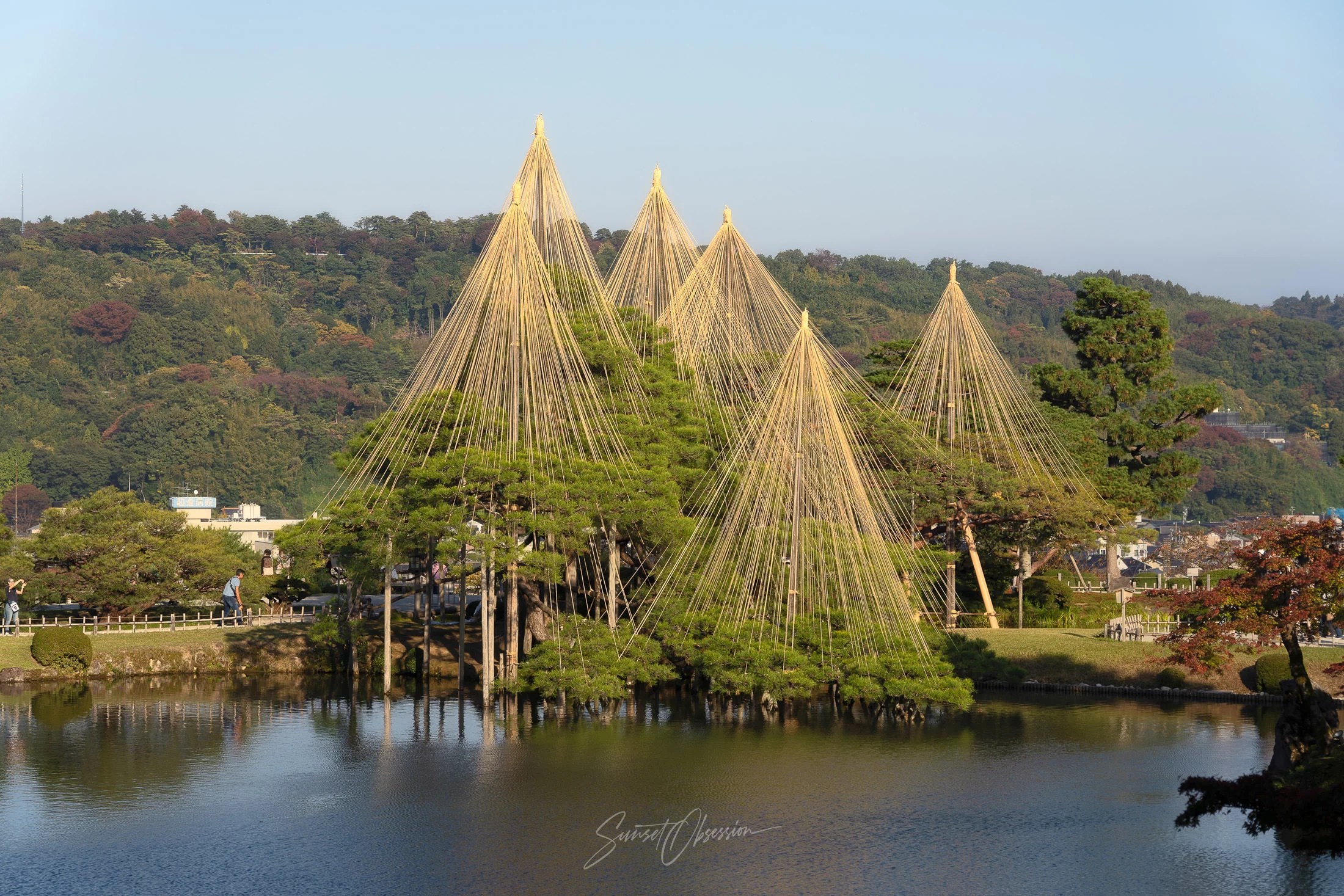
Kenroku-en has all of it and more. Ponds, bridges, teahouses, fountains, waterfalls, flowers, stones — anything you might associate with a Japanese garden, you’ll find it here. I can’t know for sure if it truly is among the best three in Japan, but it’s pretty darn impressive.
Kenroku-en is a fantastic place to just walk around soaking in the views and the tranquility. Especially early in the morning before the crowds arrive. It’s a place to contemplate, reflect, and seek inspiration in the harmony of nature.
And if you bring your camera, you’ll discover no shortage of fabulous shots to capture. While Kenroku-en is absolutely majestic during the cherry blossom and autumn foliage periods, every season here is beautiful in some way.
Kenroku-en is open from either 7 am or 8 am for a fee of ¥320. But here is the kicker. You can also enter it for free right after sunrise on the condition that you leave 15 minutes before the official opening. Check out the early admission section on their website for details.
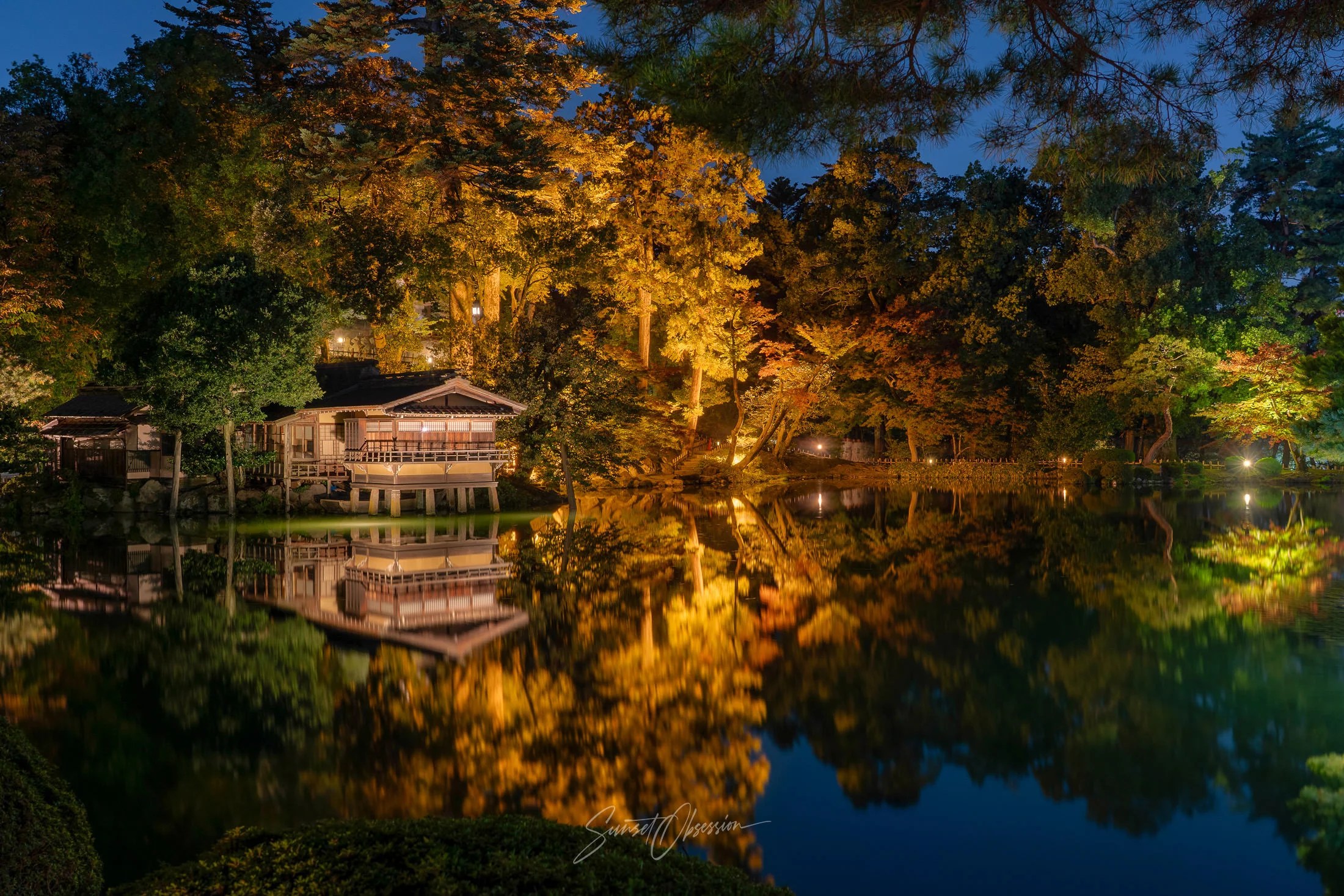
As a photographer, that’s when you want to be there. The park is almost empty short for a few locals and the early soft light on the trees is nothing but magical.
Higashi Chaya District
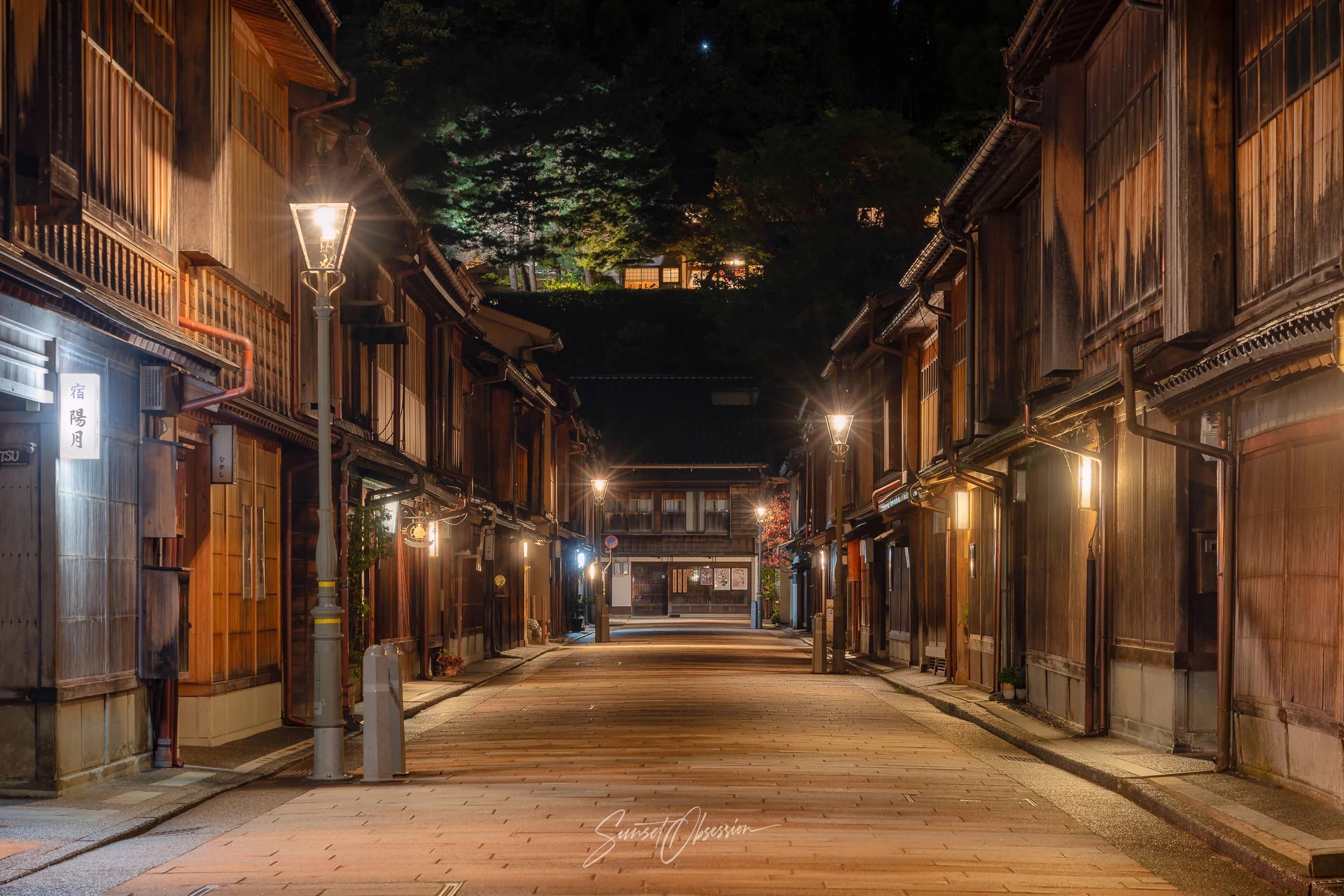
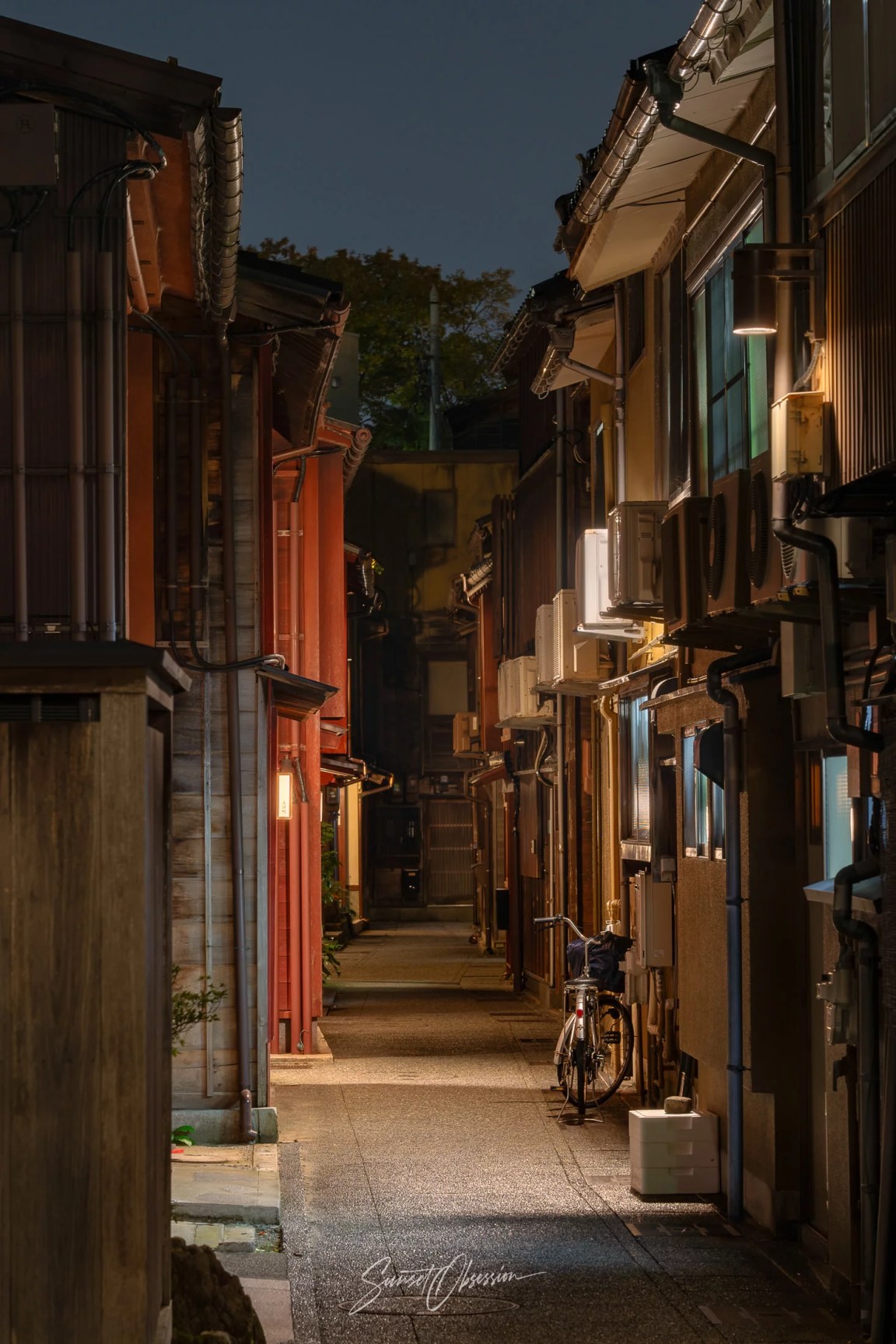
Higashi Chaya (東茶屋街) is the historic tea house and geisha district of Kanazawa. It is one of three well-preserved areas of the city where you can get a glimpse of what Kanazawa looked like a few centuries back. And by the way, geisha still entertain here today.
Higashi Chaya is home to numerous tea houses, cafes, and restaurants, as well as shops selling gold-leaf products, one of Kanazawa’s specialties. During the day, you’ll have plenty to occupy yourself with here.
Fancy a gold-leaf-covered ice cream? An interesting tea to bring home? Or perhaps something more exotic, like a gold-leaf workshop? It’s all here, just waiting to be experienced. My personal favorite was the sake tasting course in Fukumitsuya Higashi.
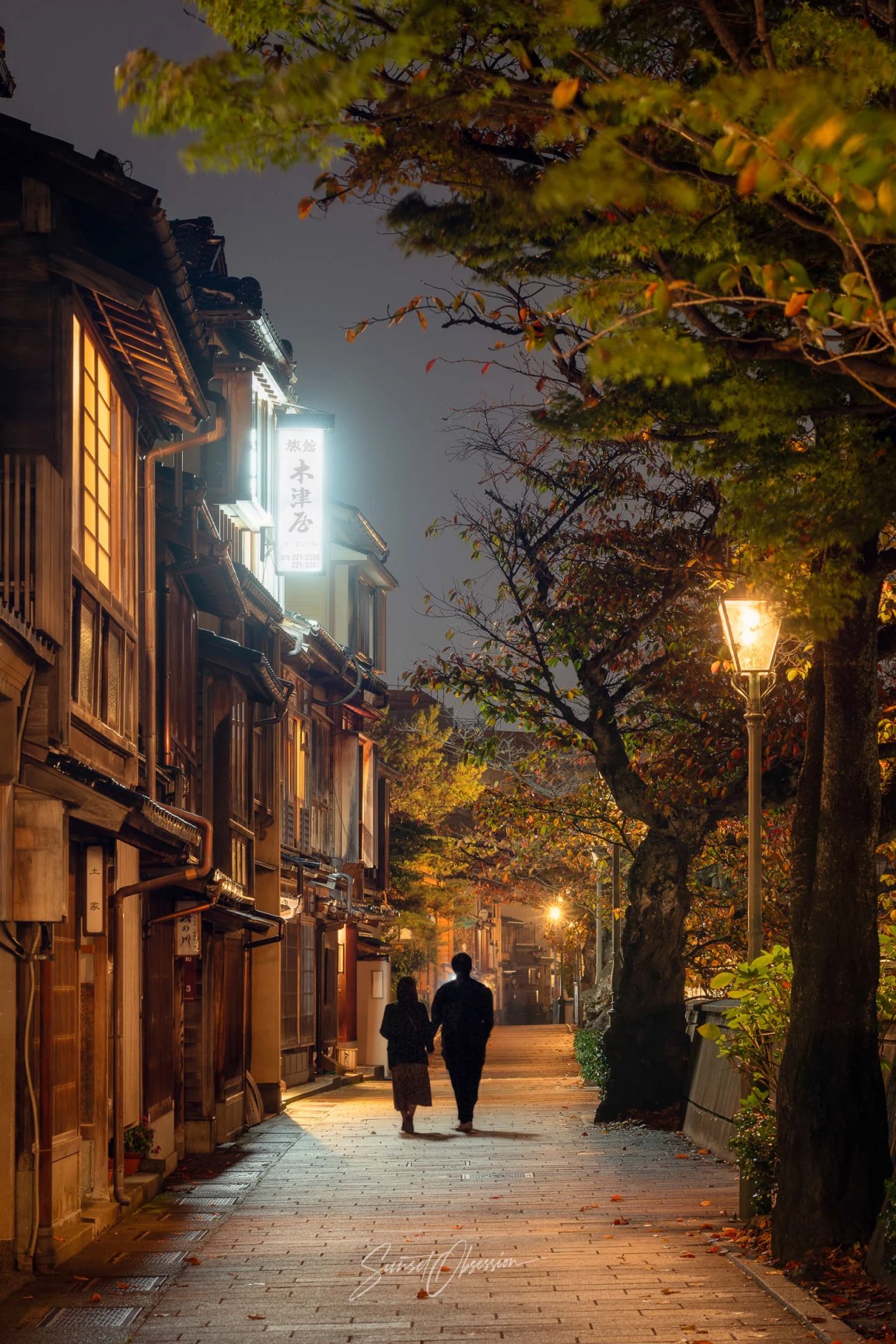
In many ways, Higashi Chaya is reminiscent of Kyoto’s famous Higashiyama district. It has a similar vibe with similar dark wooden buildings in traditional Japanese style lining the streets. But unlike in Kyoto, it is much less crowded and therefore feels more authentic.
If you’re a photographer, I suggest staying until dark. After the sun sets, the streets quickly become deserted, so you can wander around looking for some inspiring angles. And trust me, there are many of those here. It’s like having the entire place to yourself!
Gyokusen’inmaru Garden
Gyokusen’inmaru (玉泉院丸庭園) is yet another Japanese-style garden not far from the Kanazawa Castle. Though less famous than Kenroku-en and much smaller in size, it is nonetheless gorgeous and very much worth the visit.
Back in the medieval era, Gyokusen’inmaru served as a private garden for the feudal lords. And to me, it is honestly no surprise that the rulers of Kanazawa would prefer it to Kenroku-en. It is no less beautiful than its larger sibling but feels more intimate and secluded.
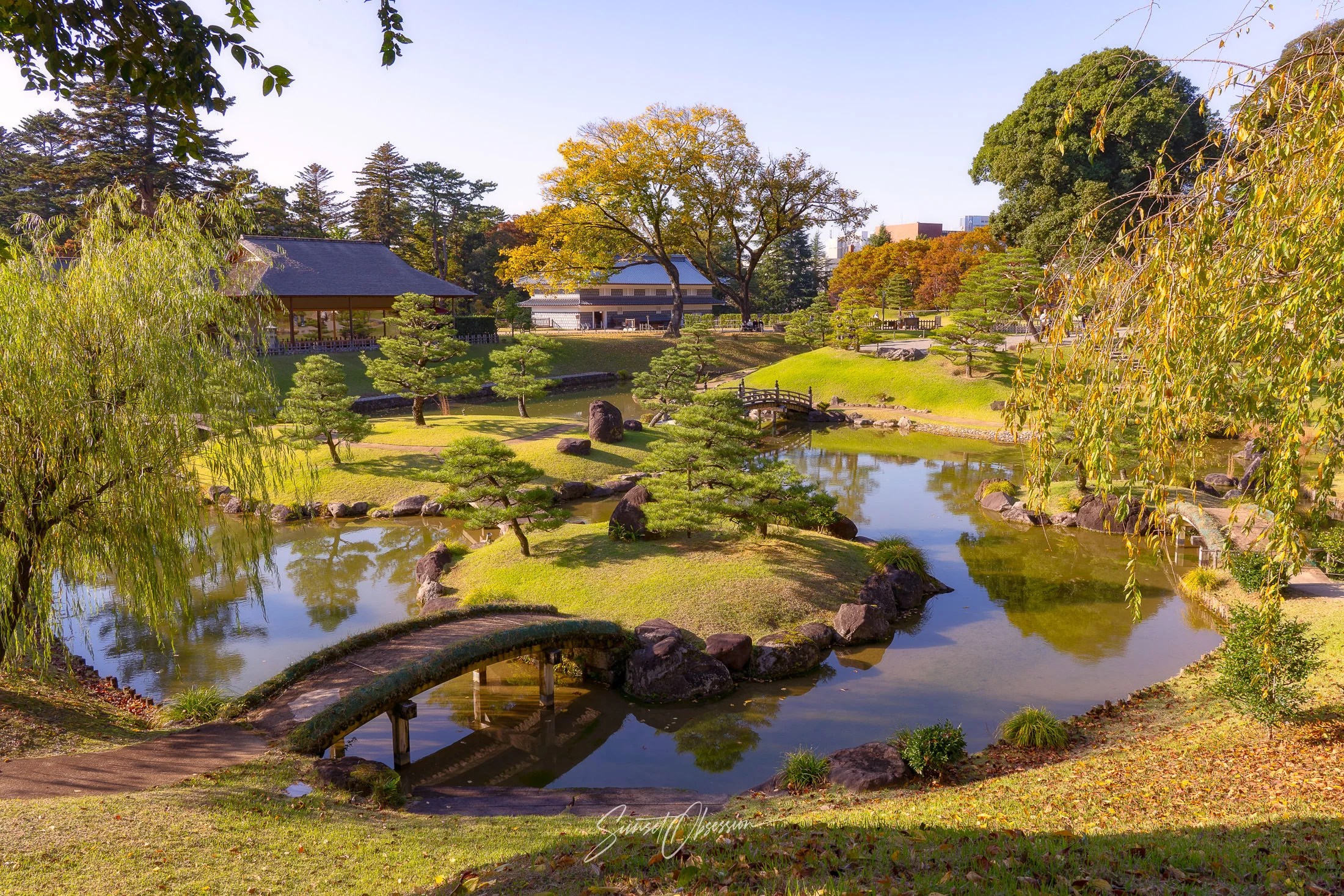
Built around the pond surrounded by carefully arranged rocks, elegant bridges, and gracefully pruned trees, Gyokusen’inmaru has a very relaxed and contemplative feel to it. It’s a cool little spot to check out before heading to the castle.
Make sure to visit the park cafe as well. Sometimes, you might find guides there who will be happy to give you a free presentation about the garden and its history.
Nagamachi Samurai District
Nagamachi (長町), also known as the Samurai District, is another beautifully preserved part of Kanazawa. Long ago, samurai and their families used to live here. Today, it’s a charming and quiet area giving you a glimpse of what Japan looked like a few centuries back.
Walking the slender alleys of Nagamachi past the traditional houses, wooden gates, and mud walls, it’s easy to forget what year it is. It’s a fascinating echo of a very different era that feels nothing like the bustling Japan of today.
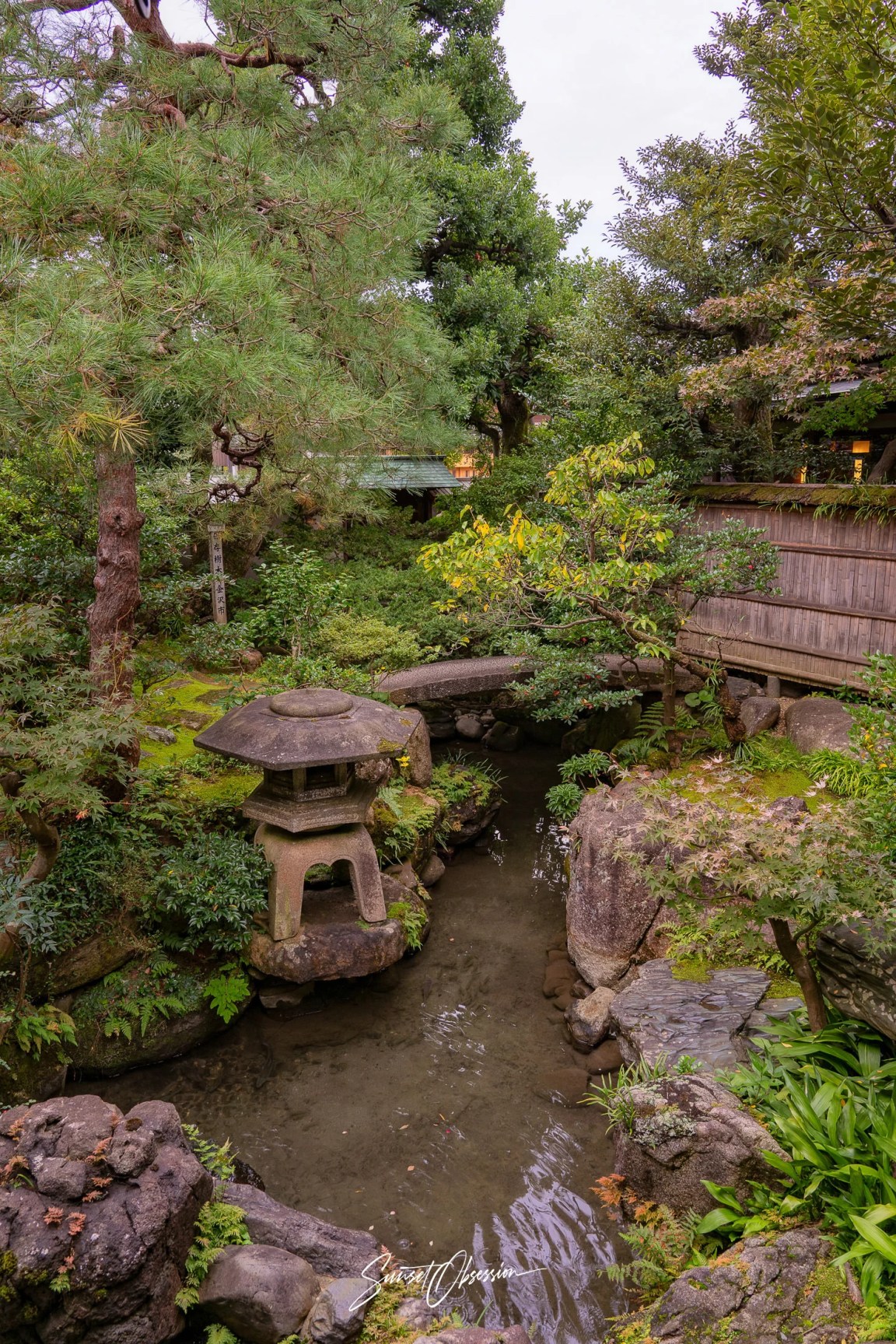
Be sure to visit Nomura-ke, a former samurai family house that has been converted into a museum. With its tatami-matted rooms, meticulously manicured gardens, and a vast collection of historic artifacts, it offers a vivid portrayal of the samurai lifestyle and culture.
Kanazawa Photography Tips
Kanazawa is very picturesque but getting good pictures here requires effort, dedication, and quite often, luck. To make it a little easier, here are some of my tips for photographing this incredible city.
- Wake up early. Most locations in Kanazawa are best photographed in the morning when the light is soft and there aren’t many people around. Sunsets can be equally fabulous but are often quite crowded.
- Night-time and blue hour are excellent for photography in Higashi Chaya and Nagamashi districts. Just keep in mind that dynamic range might become too much for even modern cameras to handle. I recommend using a tripod and taking separate exposures for lights and neon signs.
- A versatile mid-range zoom is all you need for most situations. Of course, every photographer has their own style and preference, but I pretty much never reached for anything other than my trusted 24-105 mm lens.
- One of the best ways to photograph Kanazawa is to just walk around aimlessly and look for compositions. While there are a couple of “classic” shots, much of its beauty remains to be discovered. Many of my favorite photos from Kanazawa were taken like this.
- Allow yourself enough time in Kanazawa to catch the best conditions as they don’t just happen daily. 2-3 days would be a good starting point.
General Tips for Visiting Kanazawa
If you’re planning a trip to Japan and thinking of making your way to Kanazawa, here are a few bits of advice on how to get the most out of your trip.
When to Visit Kanazawa
If your plans are flexible, autumn and spring are probably the two best seasons to be in Kanazawa. In spring, the gardens are blooming and cherry blossoms paint the city in vibrant shades of pink and white.
And in autumn, Kanazawa transforms into a canvas of fiery reds, deep oranges, and golden yellows as the foliage turns. Kenroku-en is especially spectacular this time of year.
But don’t discount winters either. The parks really aren’t at their highest during the cold months but if you’re lucky enough to have snow during your stay, you might witness a very different Kenroku-en — stunningly white, pristine, and serene.
Summer in Kanazawa is a bit of a gamble. It can be rainy in June and scorchingly hot in July and August. Keep that in mind, come prepared, and don’t let the weather spoil your trip.
How Long to Spend in Kanazawa
Kanazawa isn’t overly huge. Two days should be quite enough to cover its main highlights without too much rush.
That said, there are lots of other lovely destinations in the region. From Hakusan National Park and the historical village of Shirakawa-go to Noto Peninsula with its fabulous rice fields, there is plenty to explore.
So if you’re planning on doing additional day trips, I would suggest setting aside 3-5 days. You’ll have no problem filling that time with various entertaining activities (or locations to photograph).
Where to Stay in Kanazawa
The center of Kanazawa is where all the major highlights are. It’s very walkable and can be fully explored on foot. If you stay somewhere between the main train station and the Kanazawa castle, you might not need any transport at all.
We stayed in Hotel Forza Kanazawa — not affiliated, I just think it was good enough to recommend. The location was excellent, close to everything, cozy, and reasonably priced. Nothing to complain about.
Getting Around Kanazawa
As already mentioned, Kanazawa is no vast metropolis. If you’re decently fit, you can easily cover its main attractions by walking.
Kanazawa has no subway but there are bus lines that will help you get to where you’re headed whenever you’re too tired or going somewhere further away.
My personal recommendation, however, is to just use Uber in these situations. It’s not overly expensive and is much more enjoyable than buses which can sometimes be uncomfortably packed.
Final Thoughts
When planning my trip to Japan, I initially had my doubts about including Kanazawa in the itinerary. After all, for a photographer, there are so many fantastic options in Japan to choose from. Is Kanazawa really worth picking?
To me, the answer is yes. It’s a surprisingly charming town and a refreshing relief after the business of Tokyo and Kyoto. There is a lot to photograph here and even more to explore.
With even more picturesque locations just a short day trip away, Kanazawa has everything to make an avid photographer happy. I brought home quite a few images I feel very pleased with and I’m sure you will too. Happy shooting in Kanazawa!
I hope you enjoyed this photography guide to Kanazawa and found something useful in it. If so, do me a favor and share it with your friends and on social media. Or just leave me a comment below.
Before you go, feel free to check out my other articles about Japan and beyond. I think you’ll find lots of valuable info there to help you prepare for the trip. Here are a few suggestions of mine:
- The Best Spots for Photography in Porto and Practical Tips
- Edinburgh Photography Guide: Best Locations and Practical Tips
- Photography Guide to Scotland: How to Get Amazing Images
- Photography Guide to Madeira: Best Locations, Tips, and More
- Vallerret Skadi LRS Review: Amazing Mitt for Winter Photography
If you enjoyed this content, you can support me by treating me to a glass of ice-cold beer using a button below or joining my community on Patreon. Cheers, you’re a legend!

And of course, visit our Facebook page or follow me on Twitter and Instagram to get notified whenever I publish something new.
With that, happy travels and let’s see each other soon!
*This post contains Amazon affiliate links. I might get a small commission for purchases made through them.

Leave a Reply