
Kyoto is considered one of Japan’s most picturesque cities, and rightfully so. But amazing as it is, as a photographer, I do have a love-and-hate relationship with it. In this photography guide to Kyoto, I’ll go over some tips on how to photograph this amazing destination and try to shed some light on what makes Kyoto so controversial. So strap yourself in, and let’s get started.
A Photographer’s Dream…
There probably is no other city in Japan that is as rich in photo opportunities as Kyoto. The former country capital is home to countless temples and shrines, beautiful gardens, and a fabulous historic district.
In Kyoto, you will find not one but several absolutely iconic photography locations that every photographer dreams of capturing. I’m sure you’ve seen at least some of them already. In many ways, Kyoto is what many of us imagine Japan should look like.
But Kyoto is much more than those world-famous sights. With over 1600 Temples, 400 Shrines, and a total of 17 UNESCO World Cultural Heritage Sites, it’s a treasure trove of excellent compositions and incredible spots just waiting to be photographed.
One could easily explore Kyoto for days on end and still not run out of things to shoot. It truly is a photographer’s dream destination in that regard.
Now add to this rich cultural heritage, excellent food, and plenty of unique and entertaining experiences. What you get is a shining gem that should undoubtedly be a part of your Japan itinerary.
So what’s the catch then?
… Or Worst Nightmare
With all that, it’s not at all surprising that Kyoto attracts a ton of people. With a population of only 1.5 million, Kyoto hosts more than 50 million visitors yearly. In November 2022 alone, there were almost 5 million tourists in Kyoto. That’s a lot.
And boy, does it get crowded. As densely populated as Japan is, in no other place in the country was I so overwhelmed by the sheer number of people on the streets. Many popular landmarks feel like an entrance to the stadium before a sold-out concert. It’s that insane.
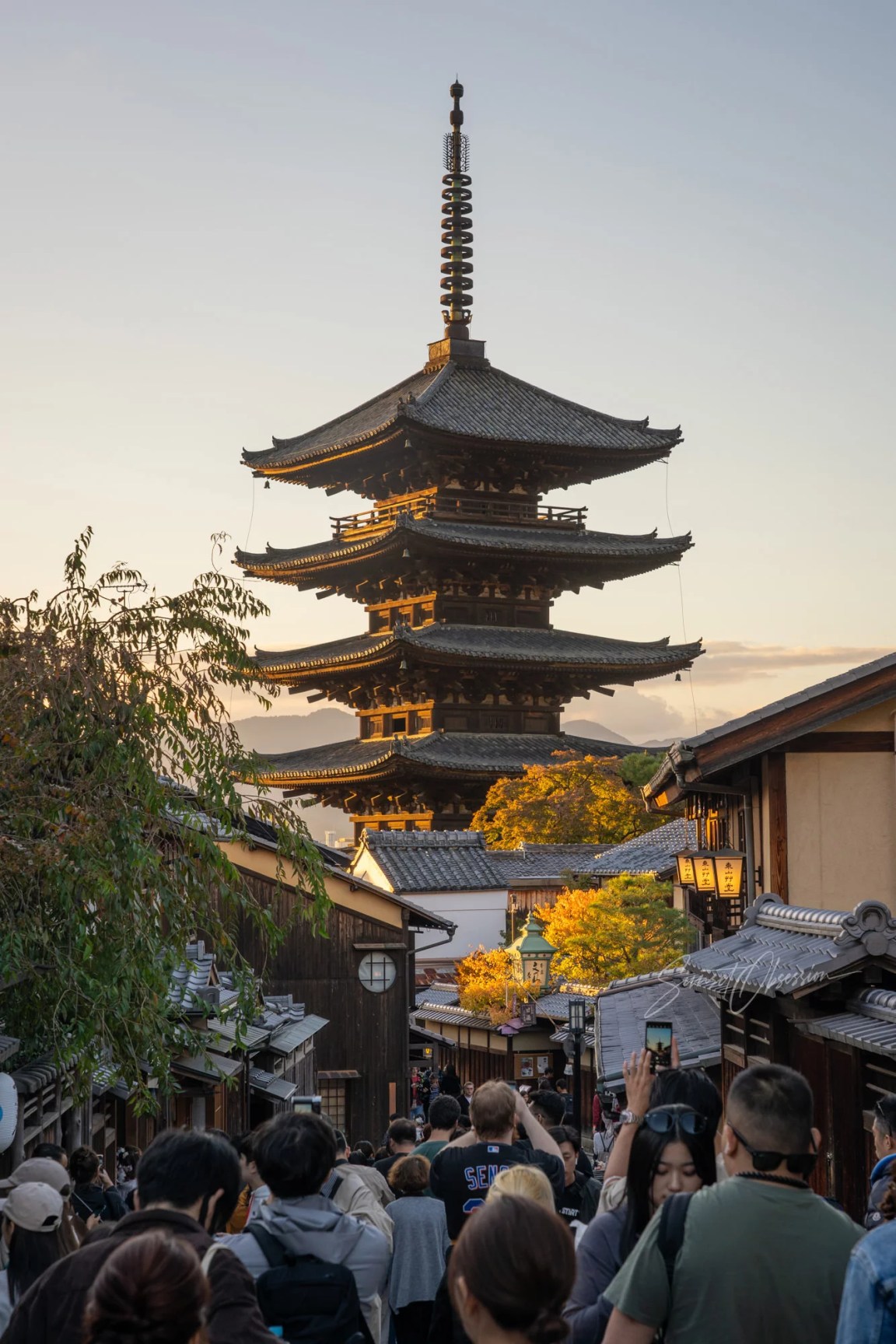
As a result, getting a clean shot at many of the spots is next to impossible. Sunsets are basically out of the question entirely. But even sunrises, the usual escape for photographers and our only chance to beat the crowds don’t offer much reprieve.
More than once, I woke up super early to be at the desired spot by first light, only to discover a bunch of people already there and more arriving by the minute.
I don’t mean to sound elitist in any way when I say this. None of these locations are any more mine than anyone else’s. And yet, for someone on a hunt for that perfect photo, Kyoto can be extremely frustrating.
And that’s exactly the reason for my love-and-hate relationship with it. Kyoto is without a doubt a fantastic photography destination that I would recommend anyone to visit. I am also happy and grateful to bring back all the images you see in this article.
That said, next time I’m in Japan, I will happily skip Kyoto in favor of more enjoyable and equally gorgeous areas. Japan has no shortage of those after all.
Top Photo Spots in Kyoto
With that out of the way, here are some of the top photo spots in Kyoto you cannot miss. Incidentally, these are also huge tourist favorites, so expect them to be pretty busy. Keep that in mind when planning a photo shoot there.
Kiyomizu-dera
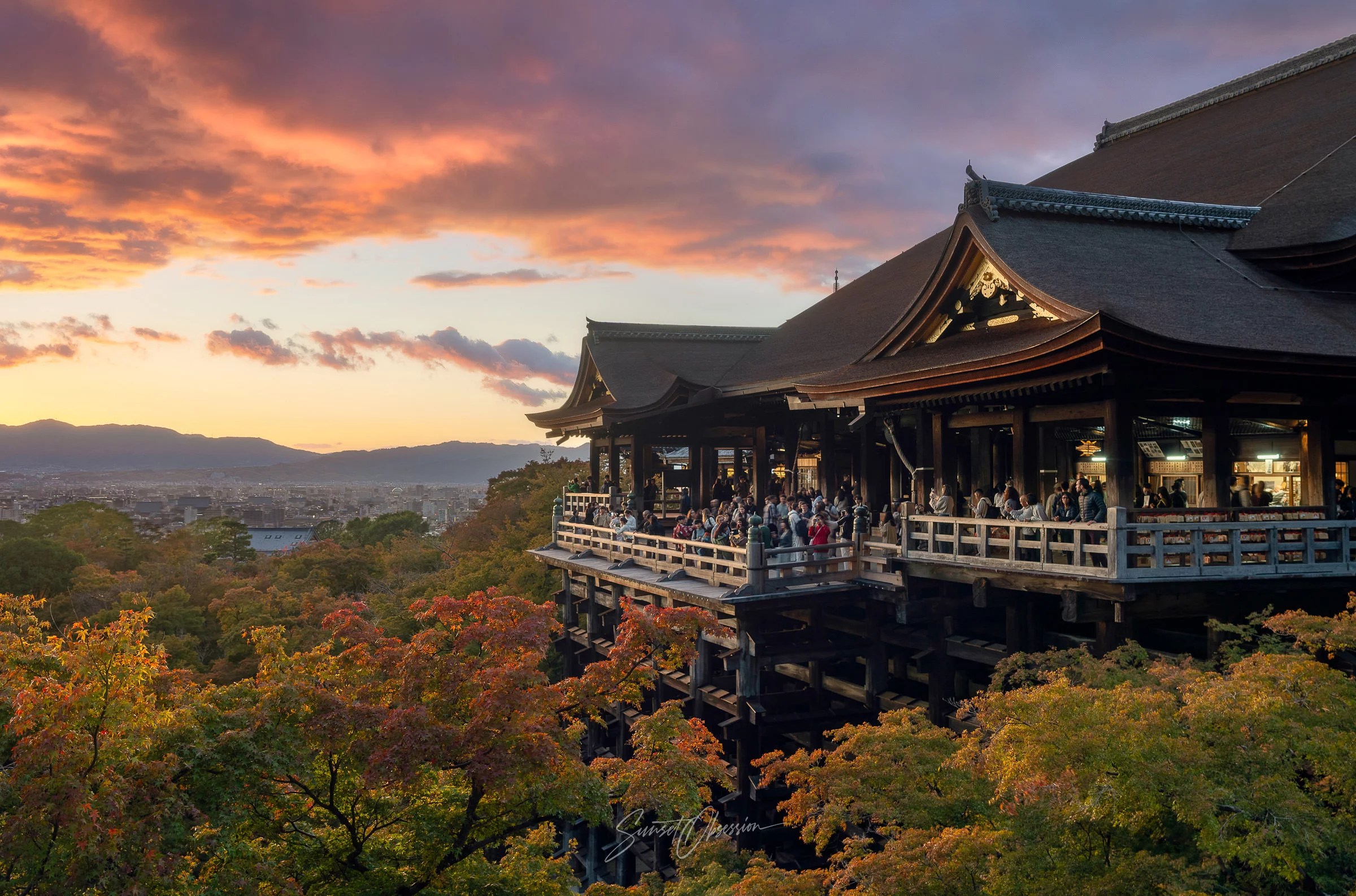
Kiyomizu-dera (清水寺, literally “Pure Water Temple”) is arguably Kyoto’s most celebrated temple. Its terrace offers a magnificent view of the cherry and maple trees below (especially captivating in spring or autumn) with a backdrop of Kyoto far in the distance.
Kiyomizu-dera is well worth exploring for its historical and cultural merit alone. However, for photographers, it doubles as an excellent sunset location. It is among the best in Kyoto, in my opinion.
As the sun goes down, it illuminates the trees in front of the terrace with soft golden colors. And if you’re lucky enough to also have some clouds in the sky, you’re in for a proper spectacle.
The area around Kiyomizu-dera is free to access but the inner grounds (where the viewpoint is) require a ticket. You can buy one at the entrance for ¥400 and it’s not bound to a specific date. So make sure to keep it in case you wish to return to the temple on a different day.
Also, pay attention to the closing time. Except for special occasions, it tends to be around 6 PM so you might not be able to stick around until the very sunset. Certainly not ideal but golden hour can often be equally rewarding.
As for the crowds, Kiyomizu-dera is extremely busy in the evening. Lots of people come here to enjoy the sunset, and setting up a tripod will be problematic. You might have to shoot hand-held or search for a free corner somewhere to the side from the main platform.
Higashiyama Historic District
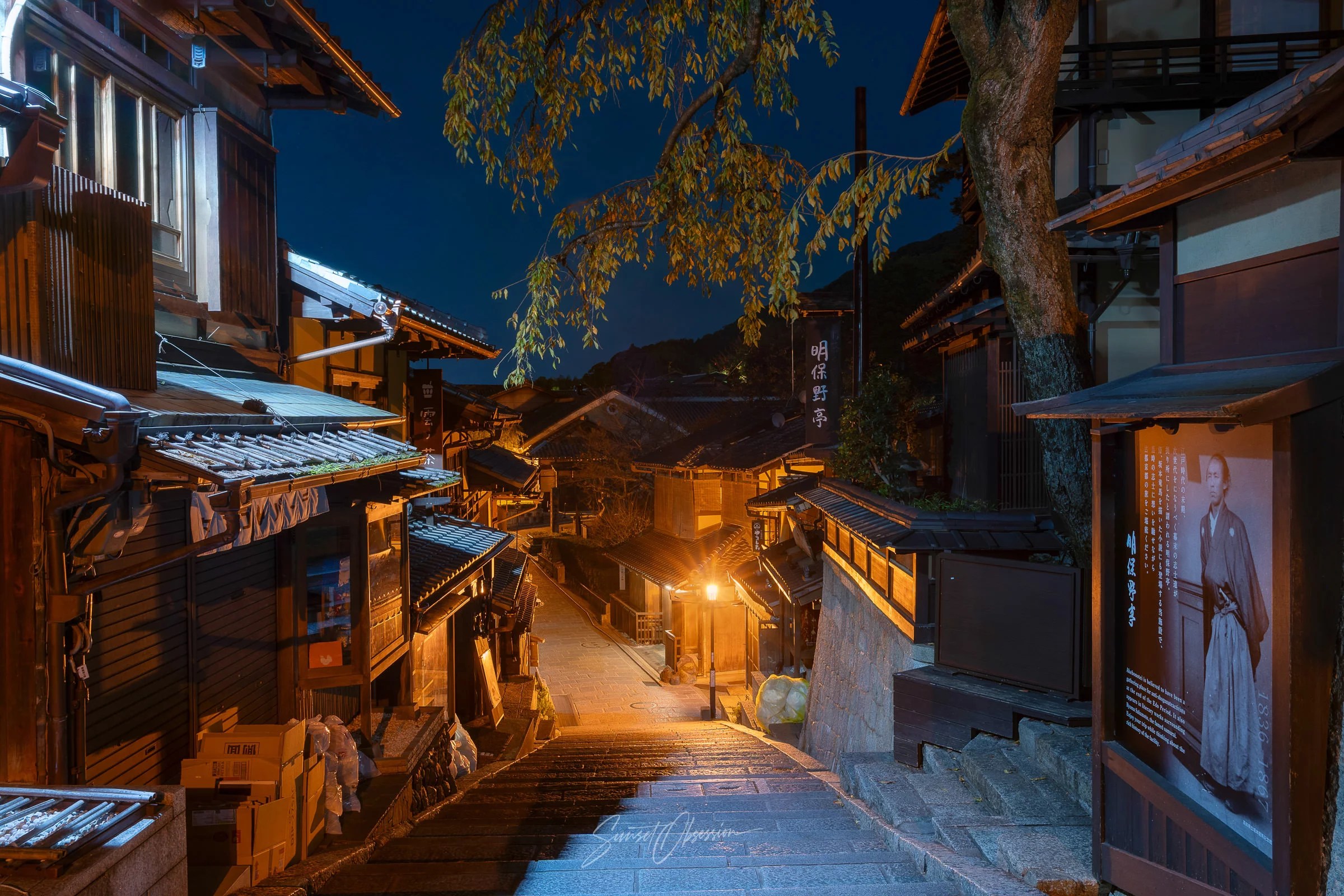
Higashiyama (東山) is among Kyoto’s best-preserved and charming historic districts. Its narrow streets lined with traditional wooden buildings and artisan shops bring you back in time and give you a glimpse of what Japan used to feel like a few centuries ago.
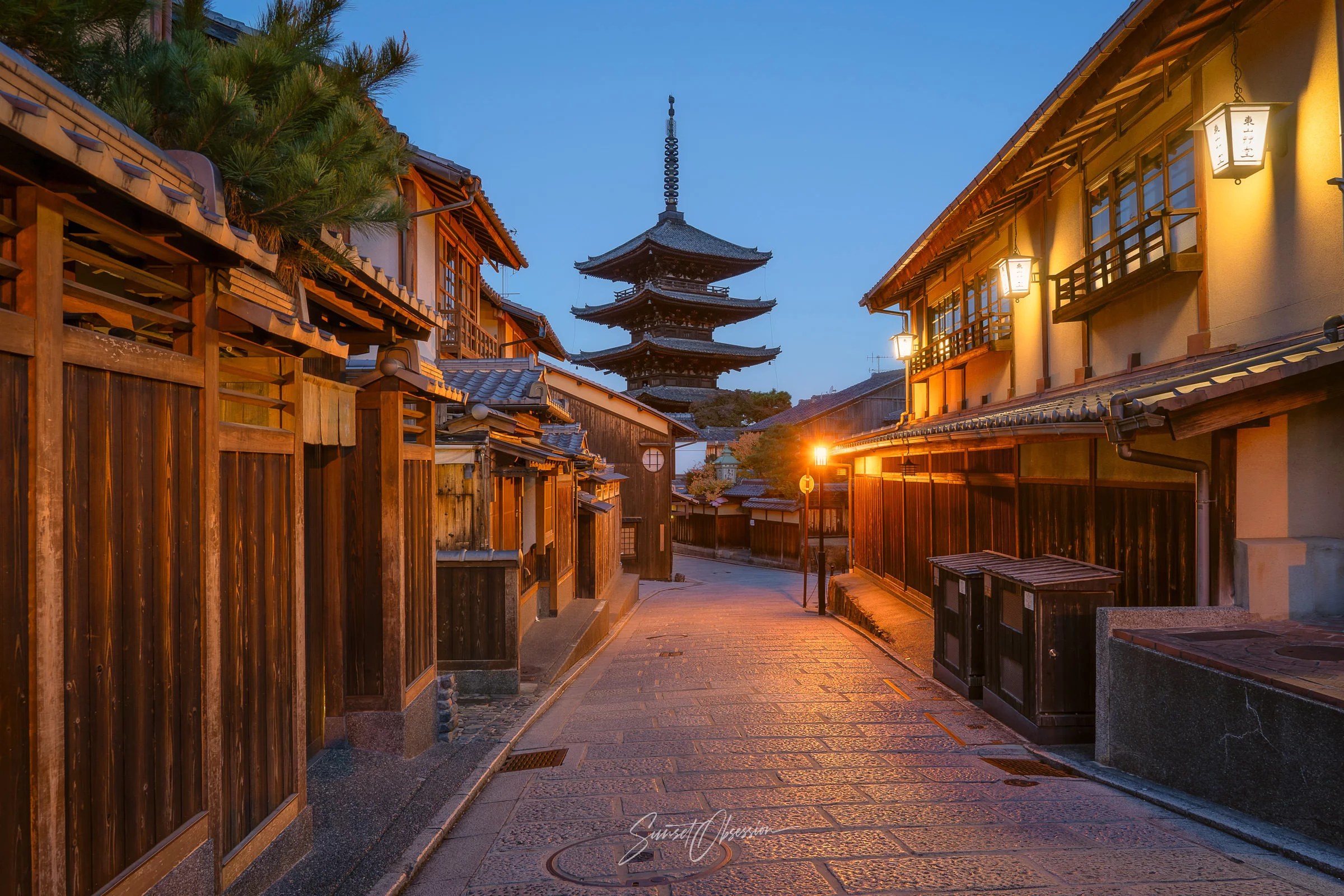
It’s here that you will stumble upon one of Kyoto’s most iconic photo locations — the Yasaka Pagoda. Chances are you’ve seen a picture of it before. The cover of the recent edition of the Lonely Planet Guide to Japan is one example of it being featured.
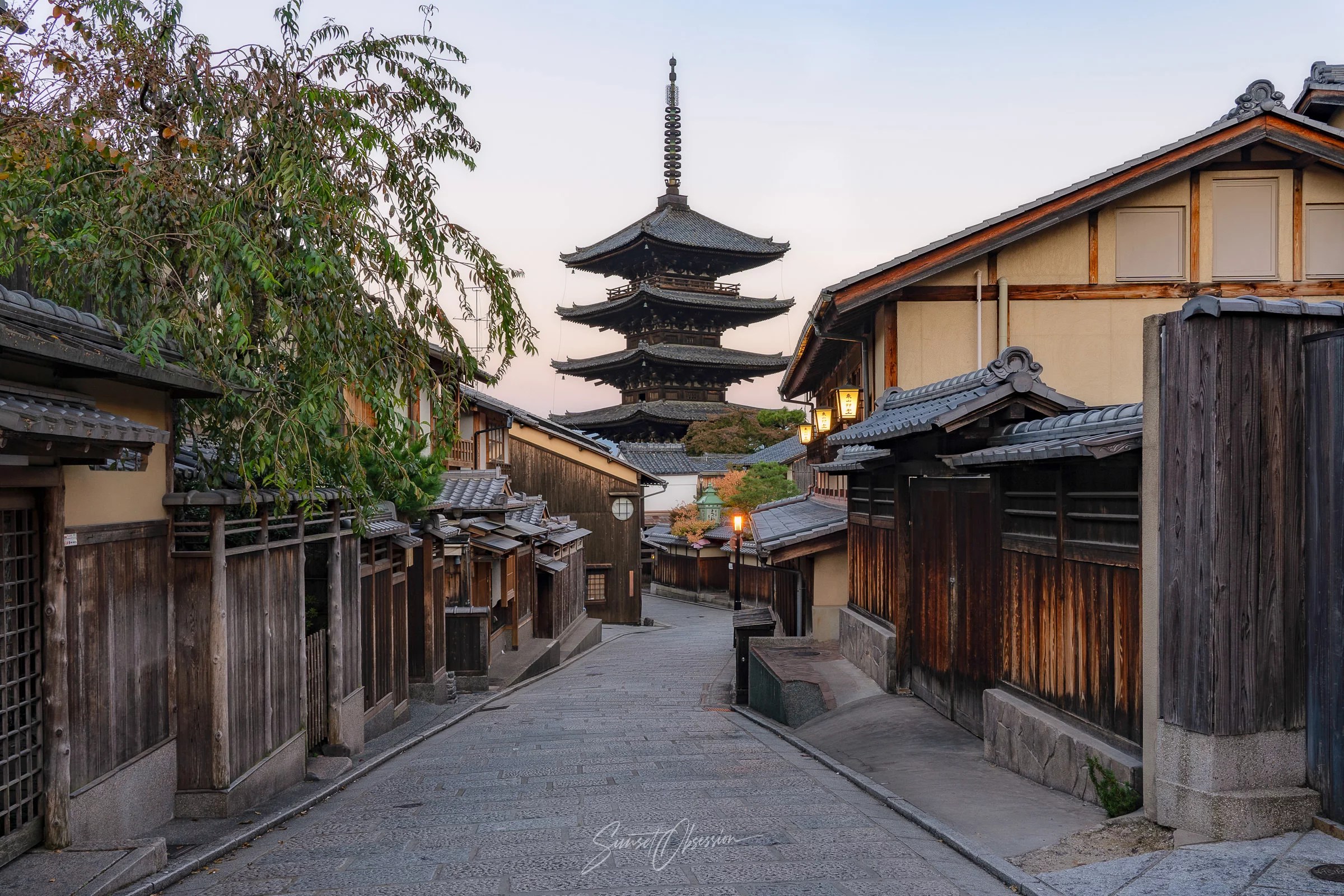
Unfortunately, I’ve got bad news for those eager to get a shot like that. You’re not the only one. Far from it. The Higashiyama district is swarming with tourists all day and well into the night. And well, many of them are after the same thing.
Mornings aren’t much better either. By sunrise, the viewpoint is besieged by numerous photographers and Instagrammers, some of whom are quite comfortable blocking the view for extended periods.
I managed to nick a decent image right after sunrise (sadly, the sky wasn’t too cooperative that morning) but all in all, my advice to you is this. If you want to have the place all for yourself, come at night, 10 PM or later.
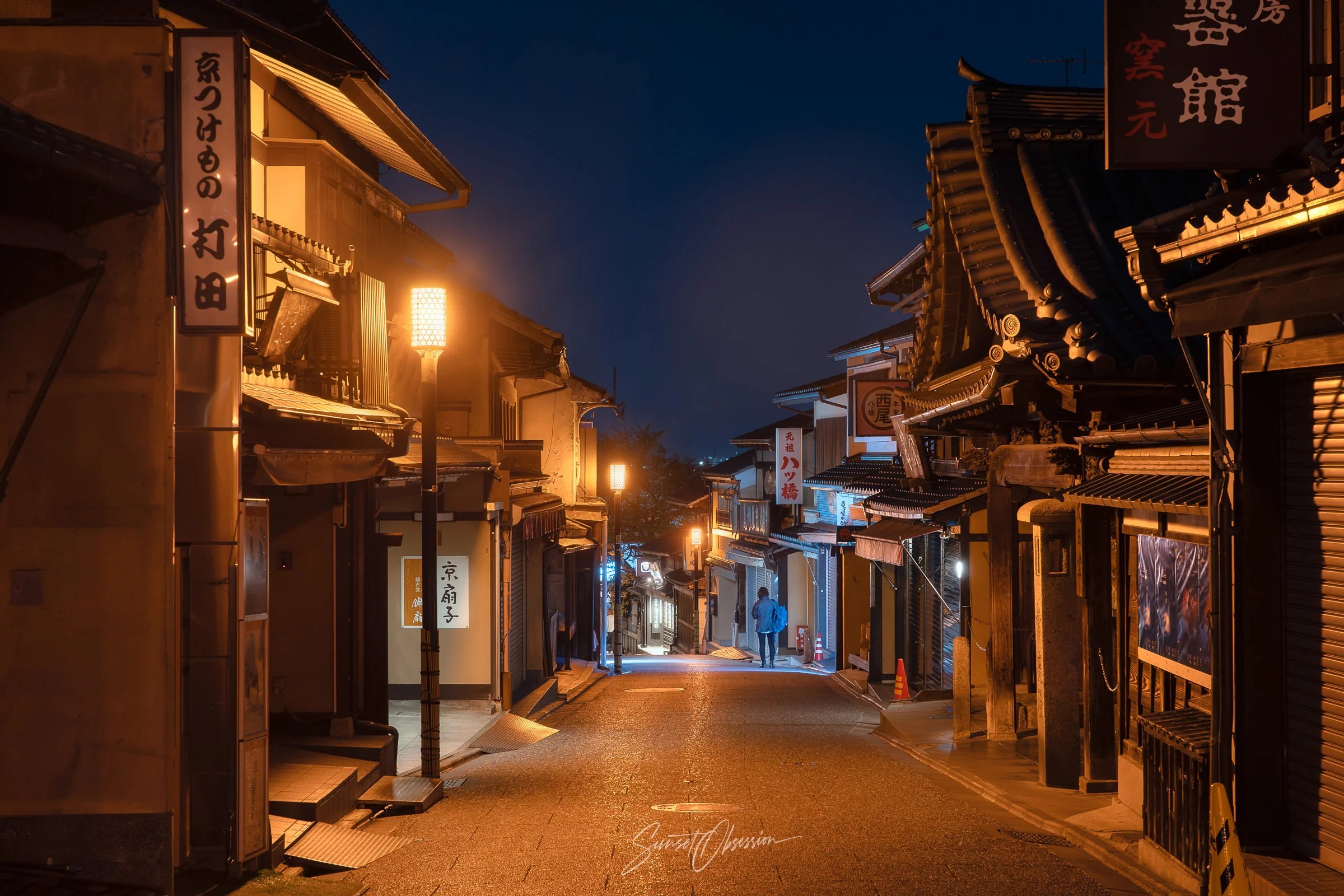
By then, people will have typically moved on to their evening activities leaving Higashiyama completely deserted. It’s a much more tranquil experience and you can capture some solid photos that do a much better job of conveying the atmosphere of this part of the city.
Fushimi Inari Shrine
The Fushimi Inari Shrine (伏見稲荷大社) is yet another undisputable symbol of Kyoto and a magnet for both photographers and casual travelers. Although, in all honesty, it’s not hard to see why.
Fushimi Inari is mostly famous for the hundreds of brightly colored torii gates lining the path to the shrine on top of the sacred Mount Inari. Together, they comprise a location that is as unique as it’s picturesque.
The problem here is once again the crowds that such renown inevitably attracts. Fushimi Inari is best photographed about an hour after sunrise. That’s when the still soft light hits the mountain creating contrast and an intricate interplay of light and shadow.
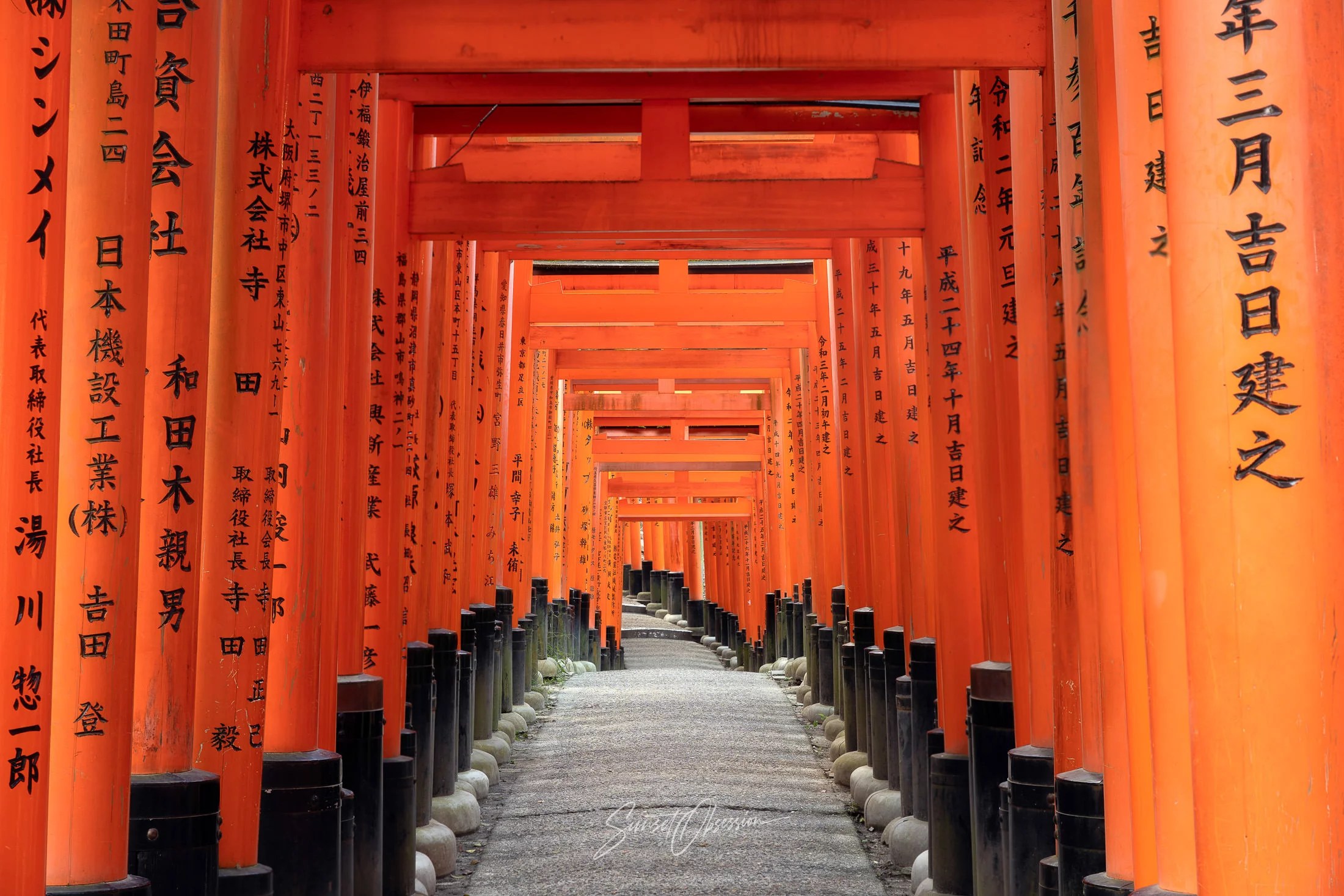
Unfortunately, by then Fushimi Inari usually gets quite busy, and taking a clean shot becomes next to impossible. So it’s a bit of a balancing game. I suggest arriving early and staying until the crowds overwhelm the place.
Patience is the key here. Search for a good spot where you can set up a tripod without blocking the path and wait. Eventually, a moment will come when nobody is in the frame. Sometimes you can also get away with taking multiple exposures and blending them in post.
Oh, and be sure to come here late in the evening after darkness. The shrine is still lit up which produces both an eerie vibe and nice patterns that make for some cool photos. Just be careful — there have been reports of the boars in the forest further up the path at night.
Arashiyama Bamboo Grove
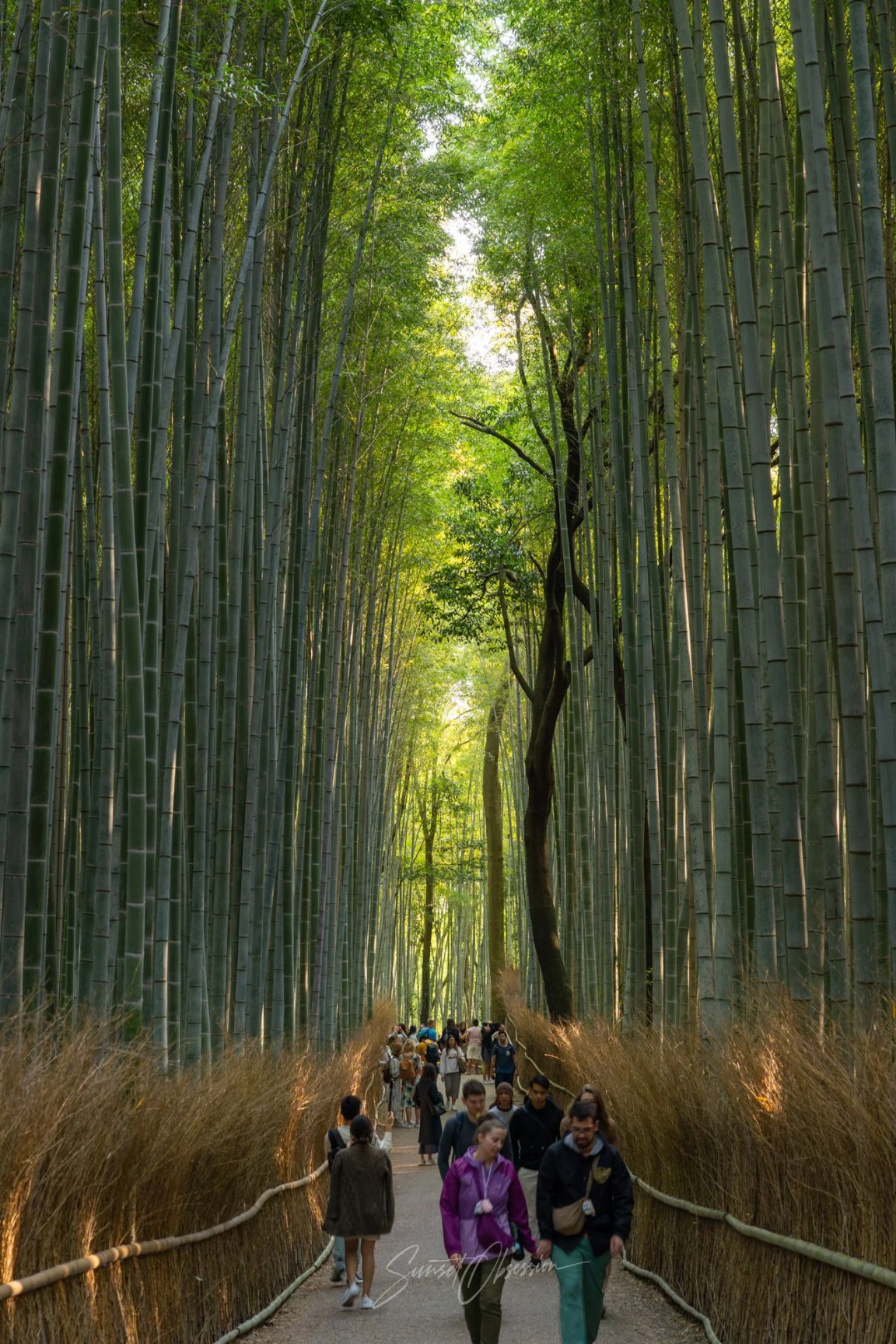
Arashiyama Grove is a natural bamboo forest in the north-western part of Kyoto. Known for its majestic tall trees and bright emerald-green colors, it is undeniably one of Kyoto’s most visited and photographed attractions.
Unfortunately, as far as overcrowded photography locations in Kyoto go, the Arashiyama Bamboo Grove is among the worst offenders. With only a few relatively narrow paths through the grove, it doesn’t take long for it to get busy.
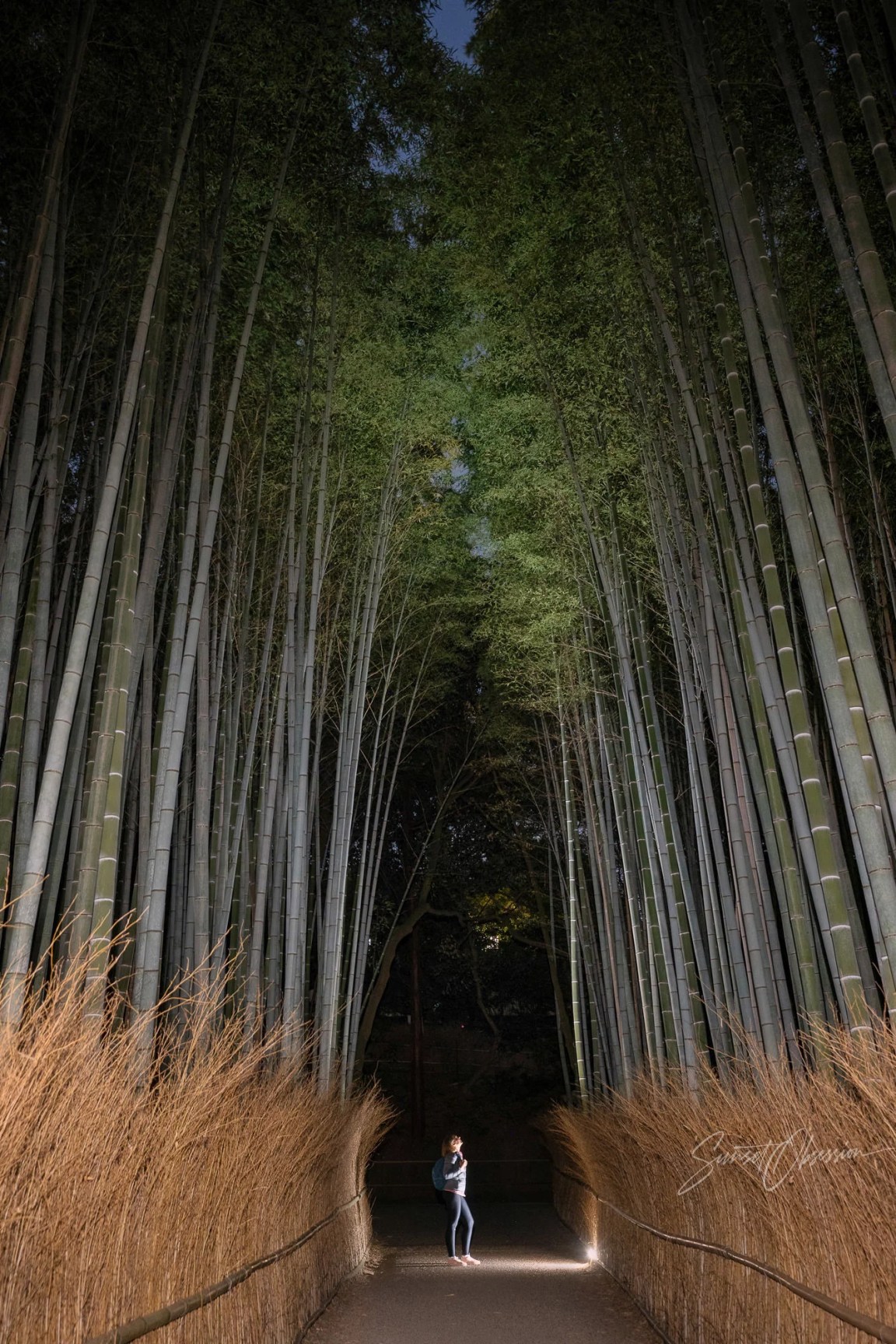
The best time to photograph here is arguably after sunrise. But even if you wake up crazy early and reach the grove by first light (not always a straightforward task given its rather remote location), having the forest all to yourself is very unlikely.
When I was in Kyoto in late October, the crowds were so bad that I eventually gave up on the image entirely. Perhaps it was just a seasonal peak and I got very unlucky. But be that as it may, it’s a good idea to manage your expectations here, if only just in case.
I even tried a night photo at Arashiyama. But although it turned out pretty well, this is certainly a location that requires light.
So if you still fancy giving it a shot (pun intended), by all means. But don’t despair if things don’t quite work out your way. There are other, no less beautiful, bamboo groves in Kyoto that aren’t nearly as packed.
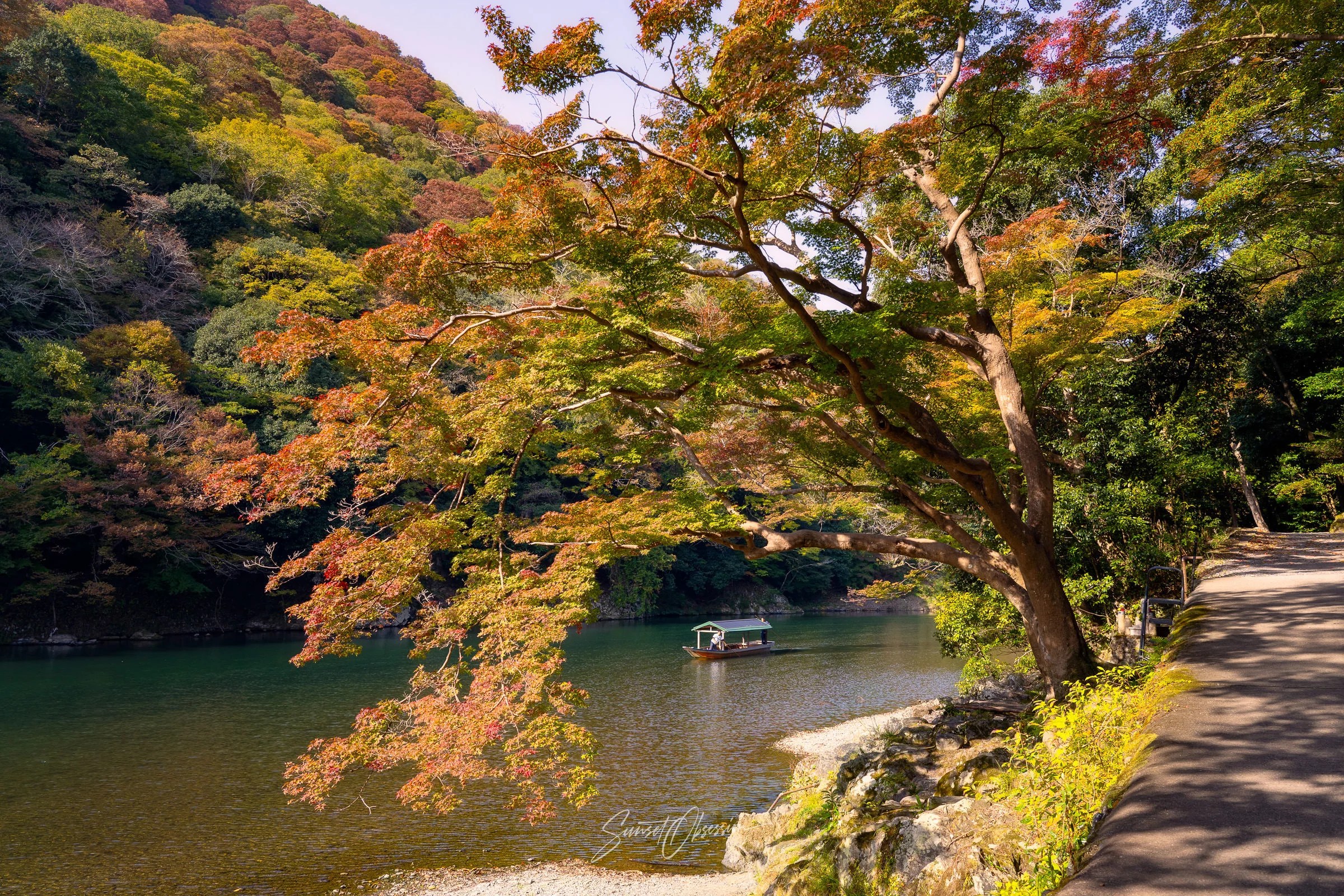
I also suggest looking beyond the main viewpoint to which everybody gravitates and exploring the surroundings of Arashiyama. It’s a lovely area and you’ll discover plenty of less conventional but far more enjoyable and serene compositions here.
Kinkakuji Temple
Last but not least on the list is the Kinkakuji Temple (金閣寺), or the Golden Pavilion. Standing amid a gorgeous garden next to a pond, this gold-covered Zen temple is as breathtaking as it gets and well worth a visit.
Ideally, you want to go to Kinkakuji on a calm windless day to capture it reflecting in the mirror-like waters of the pond. Both mornings and evenings work well but note that you can only access the temple during the admission hours.
Personally, I find evenings a tad more relaxed as most tour buses will have left by then. I entered Kinkakuji about an hour before the gate closed, and it was surprisingly manageable. I had no issue setting up a tripod almost anywhere without it becoming a hindrance.
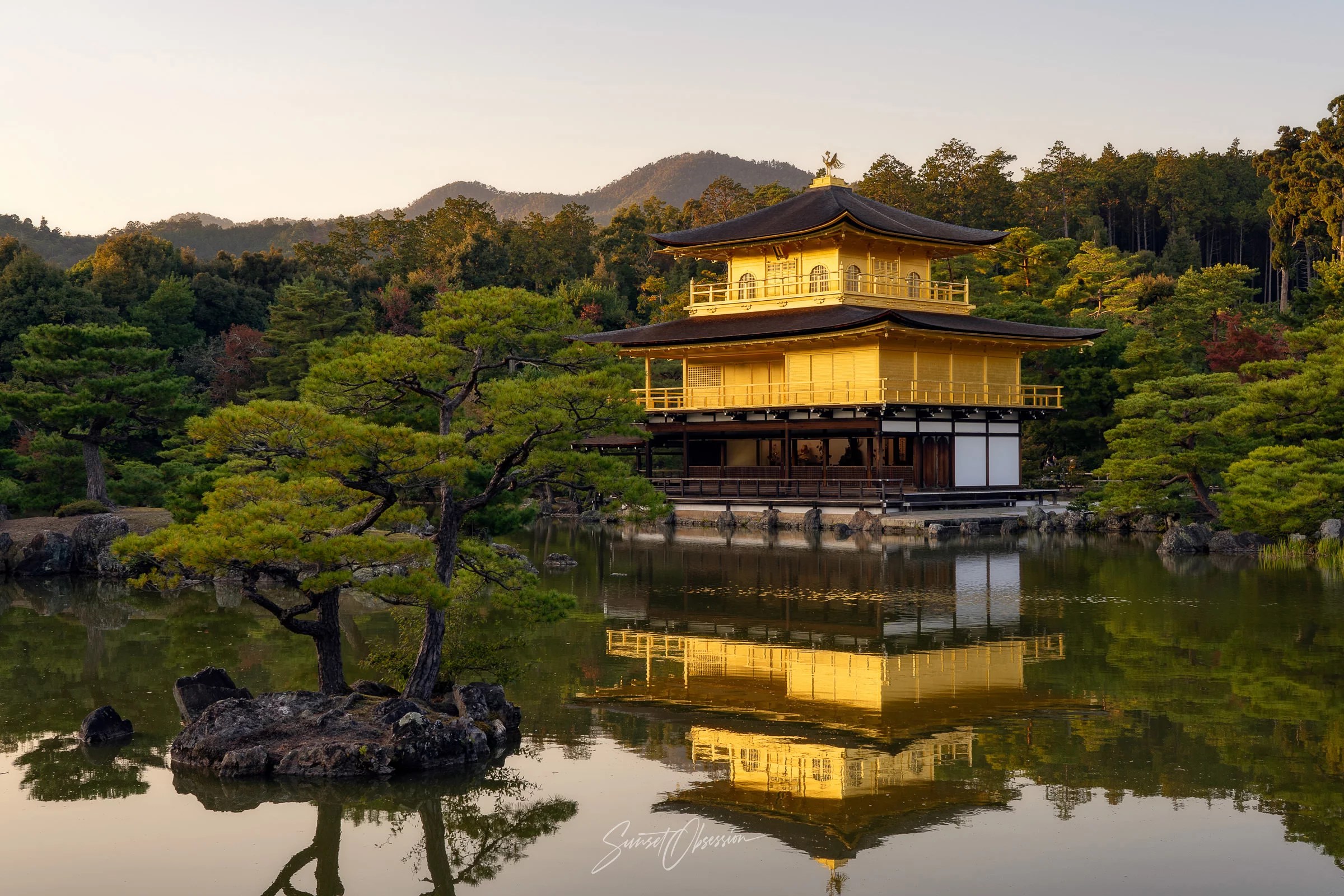
Another thing to mention is that the path around the complex that everybody is required to follow is strictly one-directional. So don’t rush it and get all the pictures you need before proceeding because you won’t be able to go back and retake them.
Kyoto Photography Tips
By now you have probably noticed a common theme. Kyoto’s most famous photography locations are also its main tourist hotspots. So here are some tips on how to deal with this situation and come away with some great images.
Look Beyond the Touristy Places
This is arguably the most cliche advice anyone can produce. But while it certainly stands true for any popular destination, it’s especially relevant in Kyoto.
There are hundreds of temples, shrines, and gardens in and around Kyoto. Many of them are incredibly scenic but largely ignored by most tourists. This means, there are endless photo opportunities that offer a much more relaxed experience.
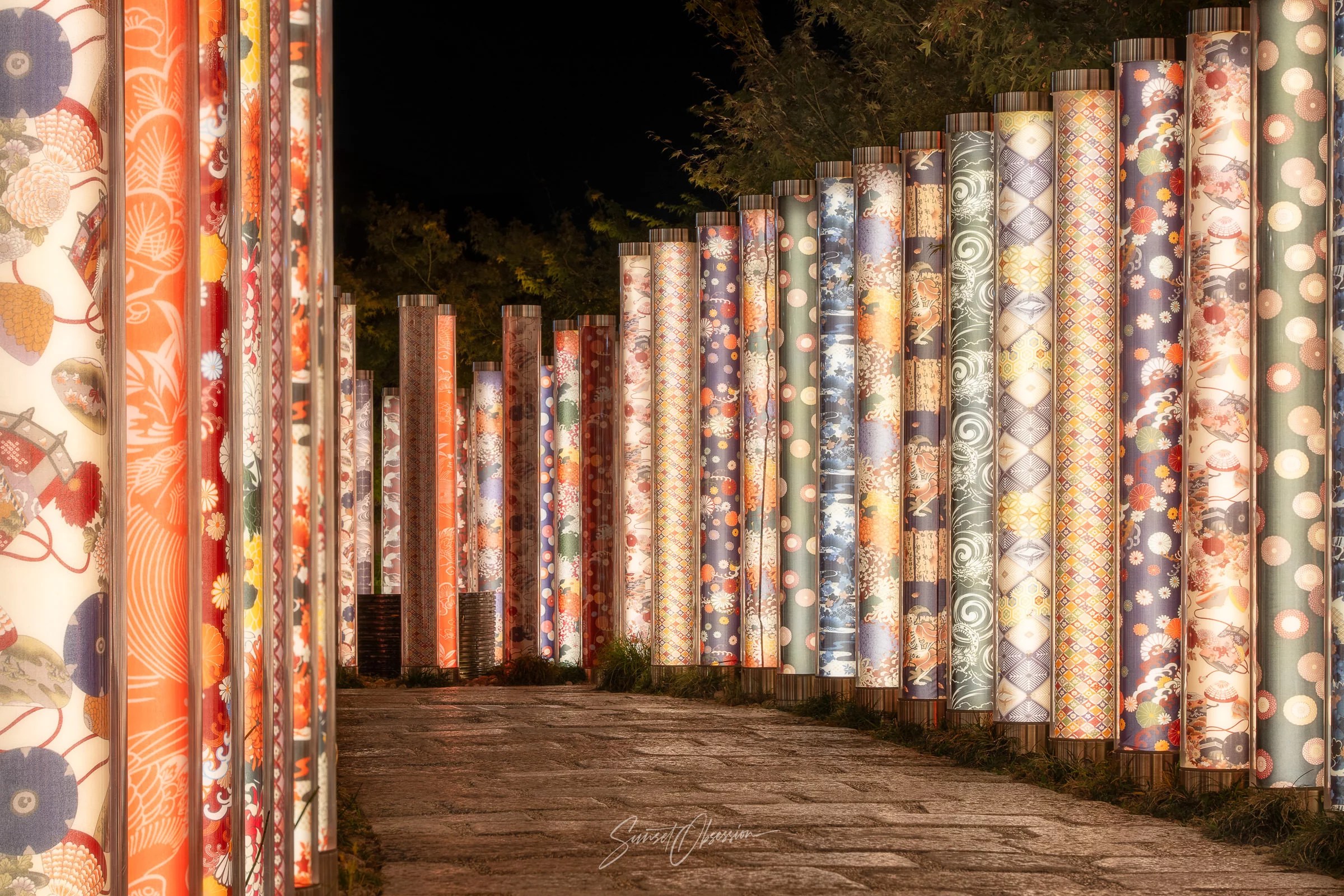
So grab your camera and go temple-touring. It feels nice — liberating even — to get away from the hordes and encounter this calmer and more relaxed side of Kyoto. And believe me, photography-wise, you’ll be well-rewarded.
Go at Night
As photographers, we are used to photograph during sunsets and sunrises when the light is at its finest. But in Kyoto, both of these will prove tricky because of the crowds.
Sunrises offer a better chance but at most prominent landmarks, you’ll meet plenty of people even early in the day.
But not all hope is lost. What I learned is that Kyoto is immensely picturesque during the night. And the coolest part — most sights are properly deserted after dark. You can venture into the Higashiyama or Fushimi Inari at 11 PM and have it all to yourself.
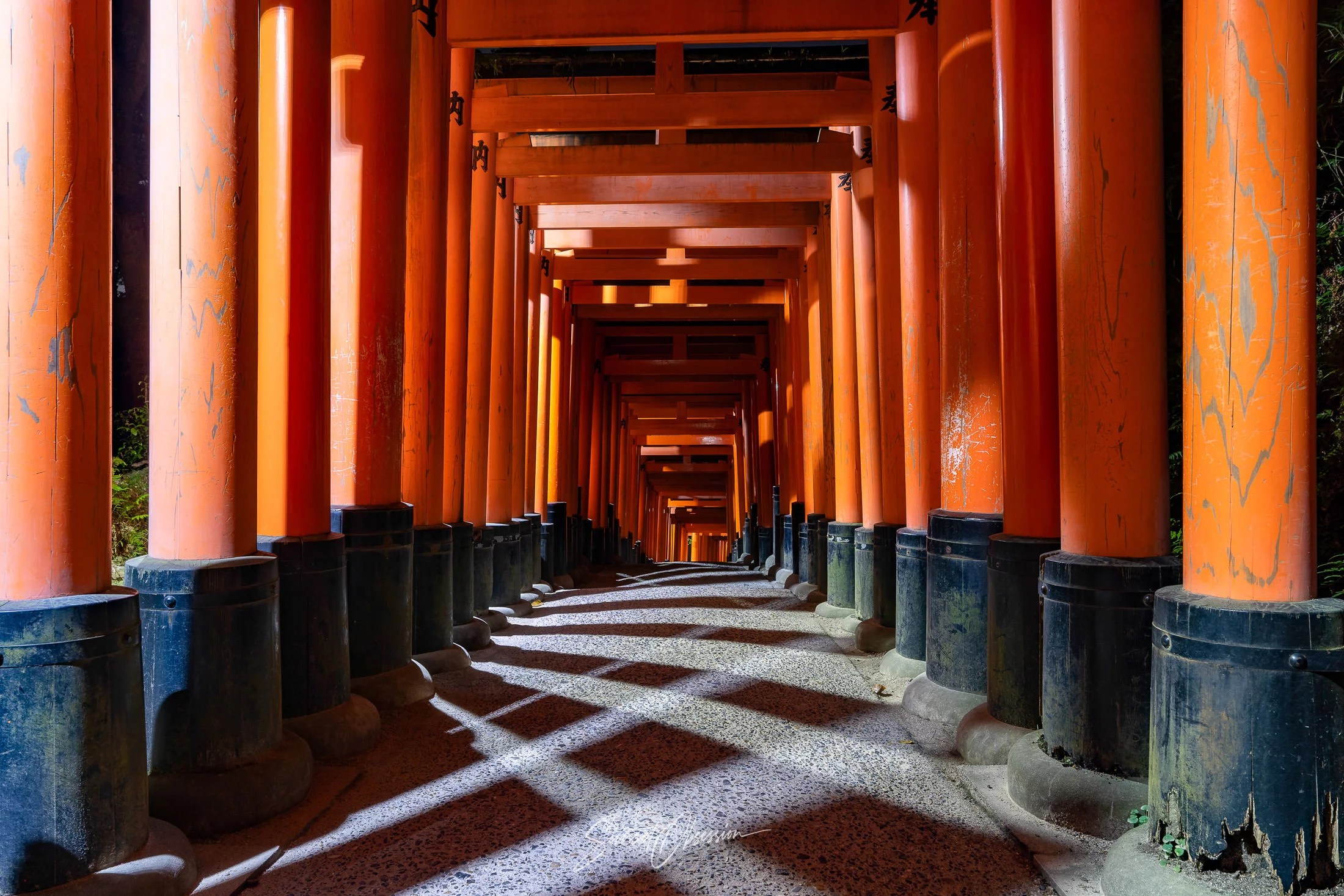
I had a lot of fun strolling through Kyoto at night with my camera ready. The streets are quiet and empty except for occasional passersby and you can fully focus on photography without being distracted.
Be Patient, Creative, and Polite
Now, searching for less popular sights and going at unconventional times is all great, but we all want those iconic photos, don’t we? After all, you probably didn’t come to Kyoto only to skip on those, right?
In that case, remember that patience is a virtue. As busy as many of the top spots get, it is often still possible to snatch an image if you just wait long enough.
So set up your tripod where you don’t impede the flow of people and bide your time. It may take a while but sooner or later an opportunity will usually present itself.
Another trick is to seek out less conventional compositions at famous landmarks. Most people tend to go for the most obvious shot without giving it much thought. Instead, try to be creative. Often, taking just a few steps to the side may pay out handsomely.
And of course, sometimes simply talking to people can do wonders. Just ask them politely to move out of your frame for a few seconds and most will happily do it for you.
Do You Really Need That Photo?
This is something I struggle a lot with myself. It is so easy to get hung up on a particular image and spend too long trying to obtain it while getting increasingly irritated when things don’t go your way. And yes, this happened to me a lot in Kyoto.
Whenever you start feeling stuck and annoyed, it’s always good to stop for a second, take a deep breath, and ask yourself a simple question. Do you really need this photo? Is this one image worth all the effort you throw at it?
Quite often, the answer is no. Remember, one door closes, another opens.
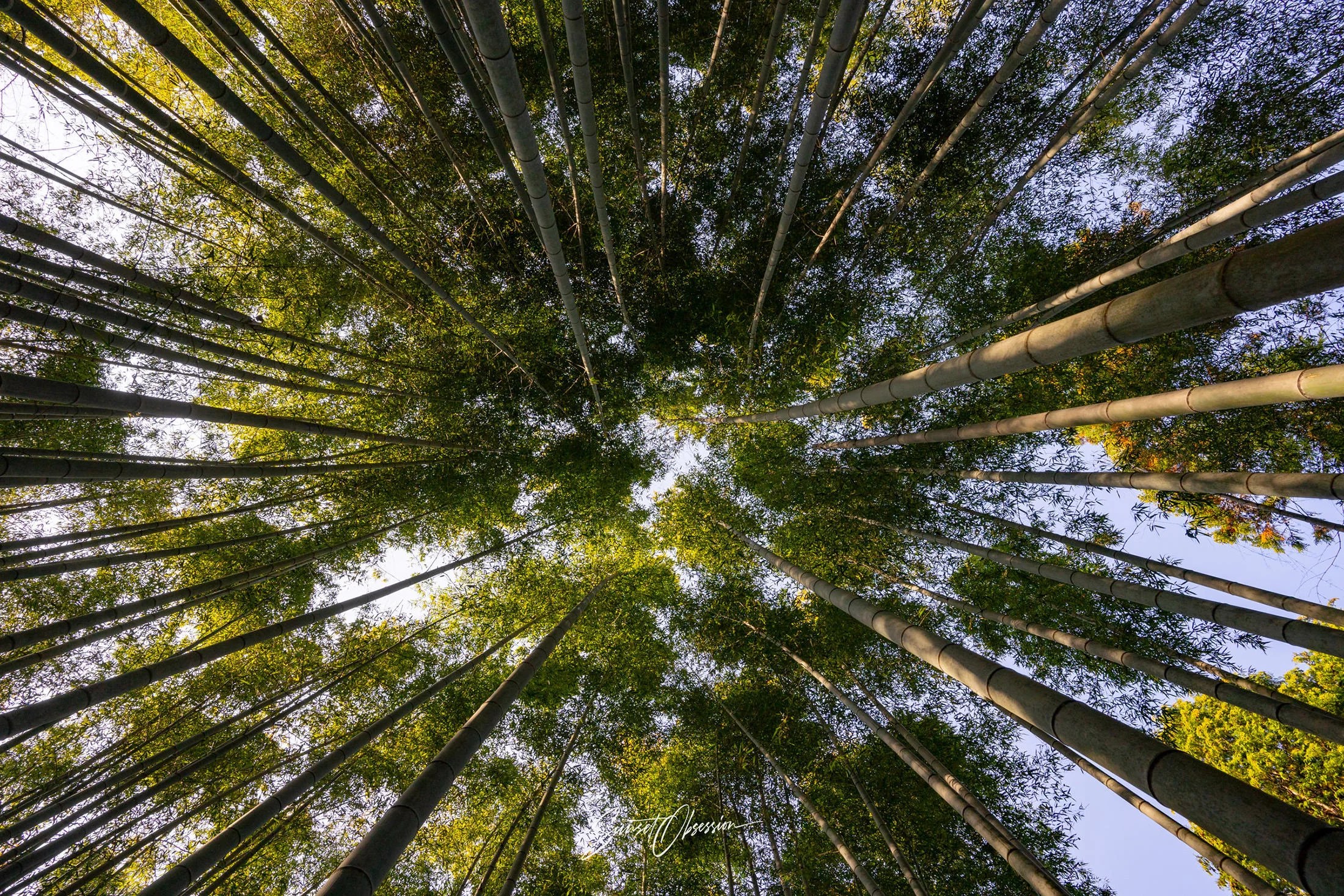
At first, I was very upset about not getting the photo I wanted at Arashiyama. But once I gave up on it and decided to walk around, I was instantly rewarded with other excellent photo opportunities. Which I would’ve probably missed entirely, had I stayed at the main viewpoint.
Besides, this gives you a chance to create something truly unique instead of just shooting what everybody else does. When life gives you lemons, make lemonade.
General Tips for Visiting Kyoto
So, Kyoto is squarely on your to-visit list? Here are some general tips on how to make the most of your trip.
When to Visit Kyoto
This all depends on how tolerant you are to large masses of people. I’m not, so my personal recommendation would be to avoid any peak seasons as well as public or school holidays.
For example, both the Hanami (sakura) and Momiji (autumn red leaves) seasons will likely be breathtaking in Kyoto. But the crowds would probably be so horrendous that I’m not even sure it’s a trade-off I’m willing to accept.
If you can choose, I’d say aim for early-to-mid autumn or mid-to-late spring, right outside of those peak viewing seasons. Sure, you might not get the brightest of colors but the city will still be amazing and a little easier to navigate.
Winters and summers are a bit of a trade-off. Winters are cold and frequently glum while summers are hot and humid. On the other hand, the unfriendly temperatures keep the visitors away so you will have a much quieter experience.
How Long to Spend in Kyoto
Despite its modest size, there is plenty to see, enjoy, and photograph in Kyoto. Therefore I suggest at least 3 days to cover the main sights without feeling overly rushed.
But of course, Kyoto is located in the Kansai region, the second most densely populated in Japan. This means there’s a lot to explore nearby. Kyoto is a convenient starting point for day trips to Nara, Osaka, Himeji, Kobe, and even Hiroshima.
So you probably want to stick around for a little longer. If you choose Kyoto as your home base while in this part of Japan, I recommend staying for 5 days to a full week.
Where to Stay in Kyoto
A simple answer to this question is — as close to the center as your budget allows. Central areas are typically quite pricey. On the other hand, I wasn’t overly impressed with public transportation in Kyoto, so a hotel too far on the outskirts isn’t ideal either.
My advice is to search for accommodation just outside the city center, yet reasonably well connected to most points of interest.
We stayed in the Kyoto U-BELL Hotel (not affiliated) and it was great value. Not too far from the main train station, close to the subway, and within walking distance of Fushimi Inari. Pretty much perfect for our purposes.
Getting Around Kyoto
As with most places in Japan, renting a car in Kyoto is more trouble than it’s worth. Unless you intend to go to some highly specific and remote locations around Kyoto, it’s completely unnecessary.
You can reach most spots of interest in Kyoto by public transport which consists of subway, trains, and buses. That said, it’s neither the fastest nor the most fun way to get around the city.
Kyoto subway is excellent but doesn’t cover many areas of the city. Buses, on the other hand, are a proper nuisance to deal with. Connections are less than ideal, timetables are not honored, and to top it off, the buses are often packed to the brim.
Taxis and Uber are decent alternatives, but you can also consider renting a bicycle. Kyoto is quite bike-friendly, mostly flat, and many attractions have dedicated parking areas (map). This makes cycling around Kyoto great fun and an affordable and enjoyable option to get around.
Kyoto Photography Gear
You don’t need much gear to photograph Kyoto. Here’s a quick list of items that I recommend having.
- A camera, naturally — any relatively modern one will do just fine. I took the photos in this article with my old but reliable Sony A7III which I think proves the point.
- A versatile walk-around lens such as 24-105 mm. It’s by far my favorite lens when traveling because it covers a variety of focal lengths and is perfect for most situations. If you want to save weight, this lens is all you need.
- A wide-angle zoom such as 16-35 mm. It’s mostly optional but I did use mine on a couple of occasions in Kyoto.
- A tripod, especially if you’re planning on photographing at night or during the blue hour.
That’s pretty much everything. My general advice is to pack as lightly as possible. You will likely walk around Kyoto for hours without returning to the hotel. No need to carry around any extra weight.
Final Thoughts
To me, Kyoto is a double-edged sword. I fully admit that it is truly a one-of-a-kind photography location that needs to be on any photographer’s itinerary. It is without a doubt one of the most inspiring destinations in Japan and well worth a visit.
And yet, I can’t help but have mixed feelings about it. Of all the places in Japan, Kyoto was arguably the least pleasant for me due to how busy and congested it was. While measures are being taken to address the issue, it is unlikely that the situation will improve soon.
There’s a proverb in Japan: “A wise man climbs Fuji once, only a fool climbs it twice”. I think it applies perfectly to Kyoto too. I’m happy to have been there and taken all the photos that I did and I fully encourage you to do the same. But will I go back to Kyoto on my next trip? Unlikely.
I hope you enjoyed this photography guide to Kyoto and got something useful out of it. If so, do me a favor and share it with your friends and on social media. Or just leave me a comment below.
Before you go, feel free to check out my other articles about Japan and beyond. There’s lots of valuable info there to help you prepare for the trip. Here are a few suggestions of mine:
- Photography Guide to Kanazawa: Capturing Japan’s Hidden Gem
- The Best Spots for Photography in Porto and Practical Tips
- Edinburgh Photography Guide: Best Locations and Practical Tips
- Photography Guide to Scotland: How to Get Amazing Images
- Photography Guide to Madeira: Best Locations, Tips, and More
- Vallerret Skadi LRS Review: Amazing Mitt for Winter Photography
If you enjoyed this content, you can support me by treating me to a glass of ice-cold beer using a button below or joining my community on Patreon. Cheers, you’re a legend!

And of course, visit our Facebook page or follow me on Twitter and Instagram to get notified whenever I publish something new.
With that, happy travels and let’s see each other soon!
*This post contains Amazon affiliate links. I might get a small commission for purchases made through them.

“Love discovering new places to shoot, especially ones that aren’t overcrowded. I’m adding it to my bucket list for sure!”